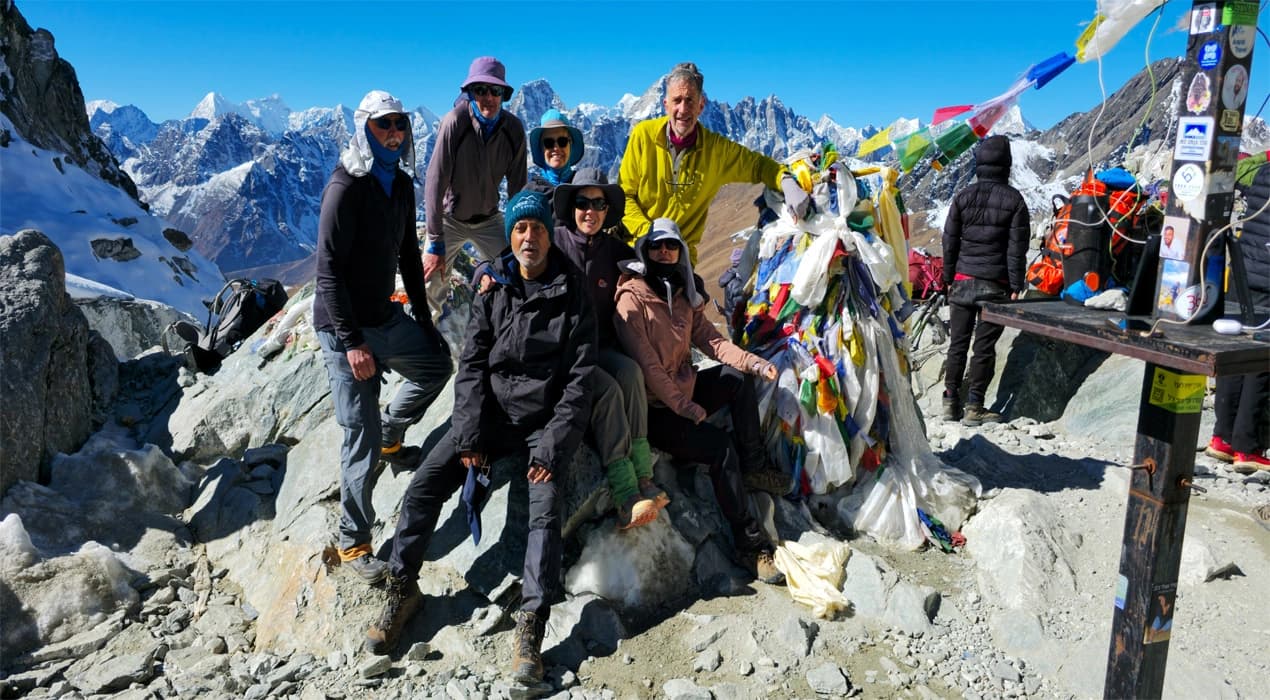
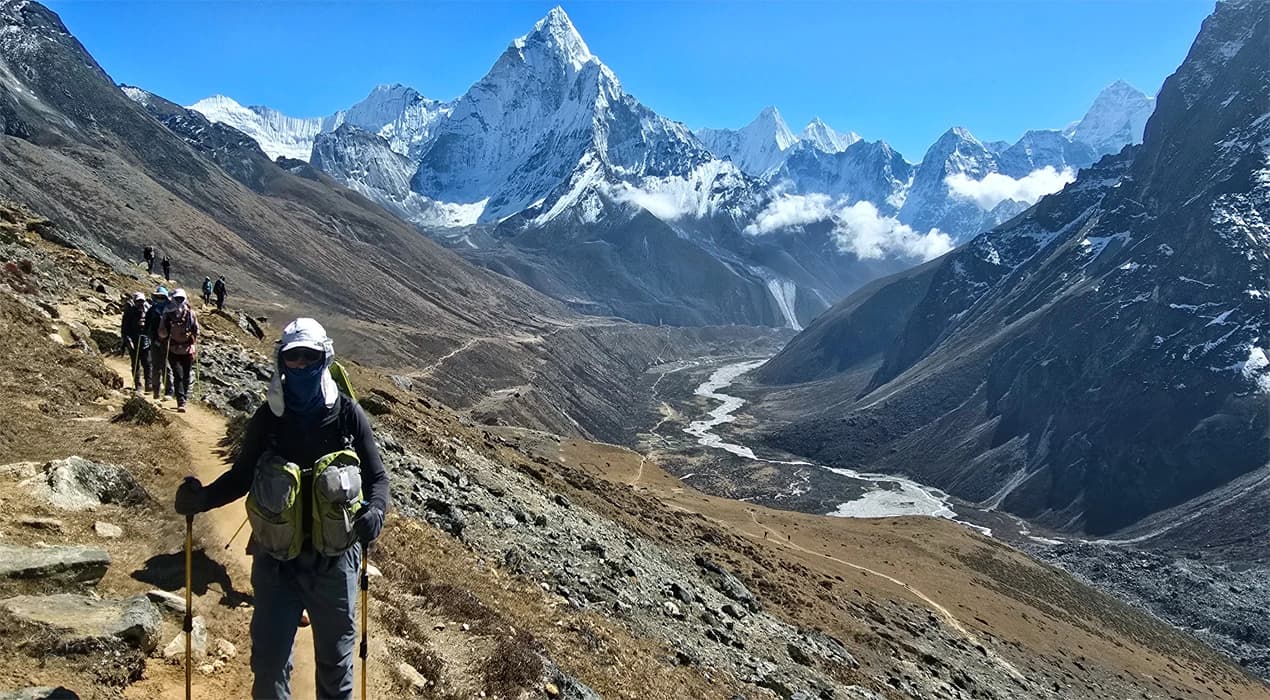
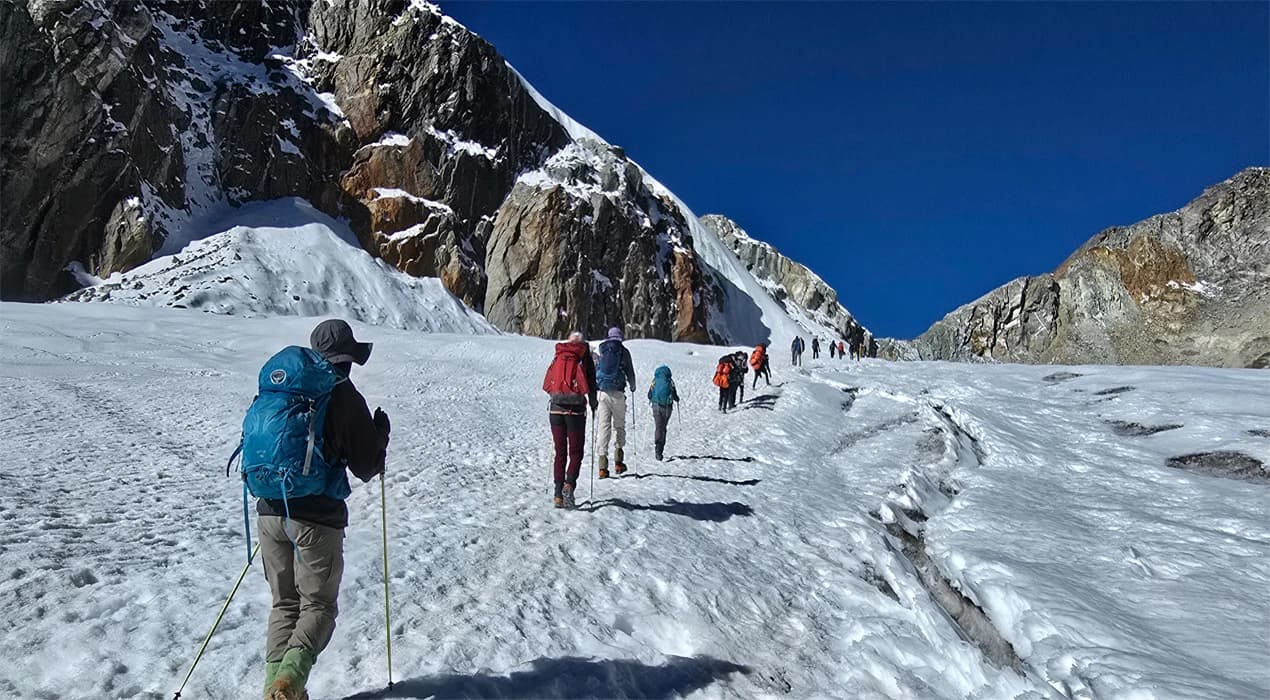
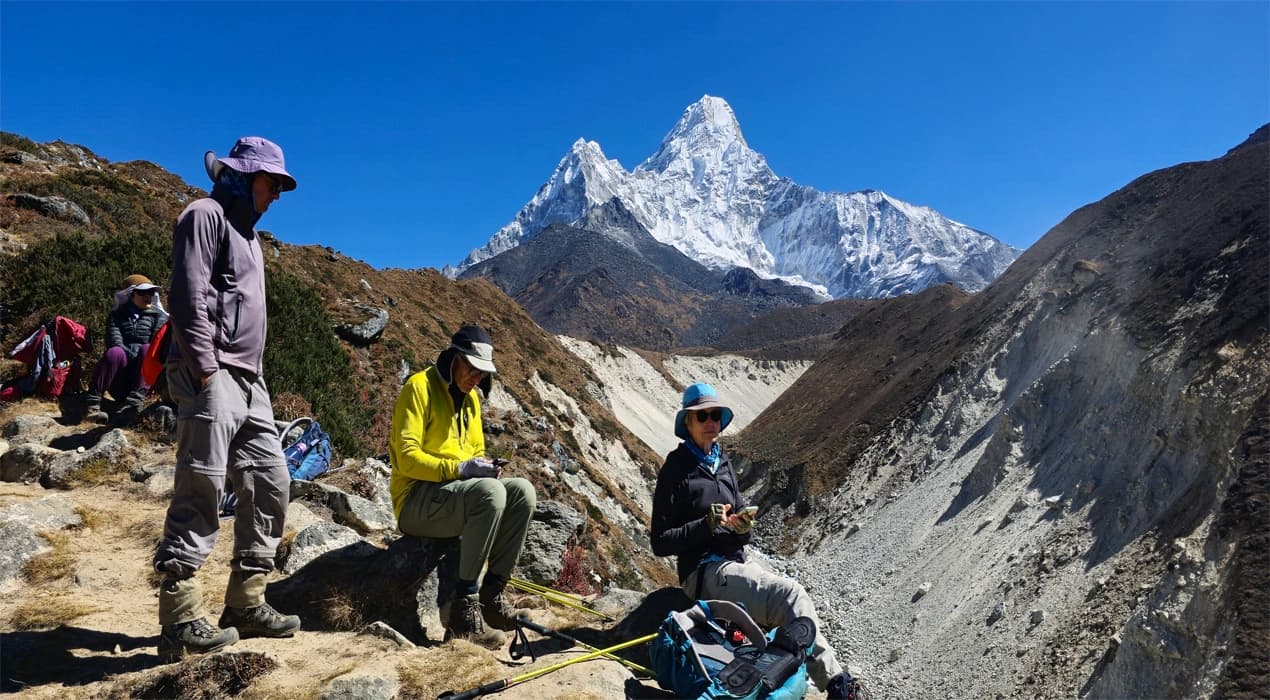
Khongma La Pass (5,535m): Pass over one of the most difficult and high passes of the region while gazing in awe at the soaring peaks above.
Chola Pass (5,420m): Adventurous approach to that high, rocky, and challenging pass linking the Gokyo Valley to the Everest region and seeing Everest, Cho Oyu, and Makalu from their north sides in fine positions.
Renjo La Pass (5,360m): The last high pass, conquest with grandeur spread over Everest, Lhotse, Makalu, and many other of the great Himalayan peaks.
Everest Base Camp (5,364m): Go to Everest Base Camp to have a close glimpse of the highest mountain.
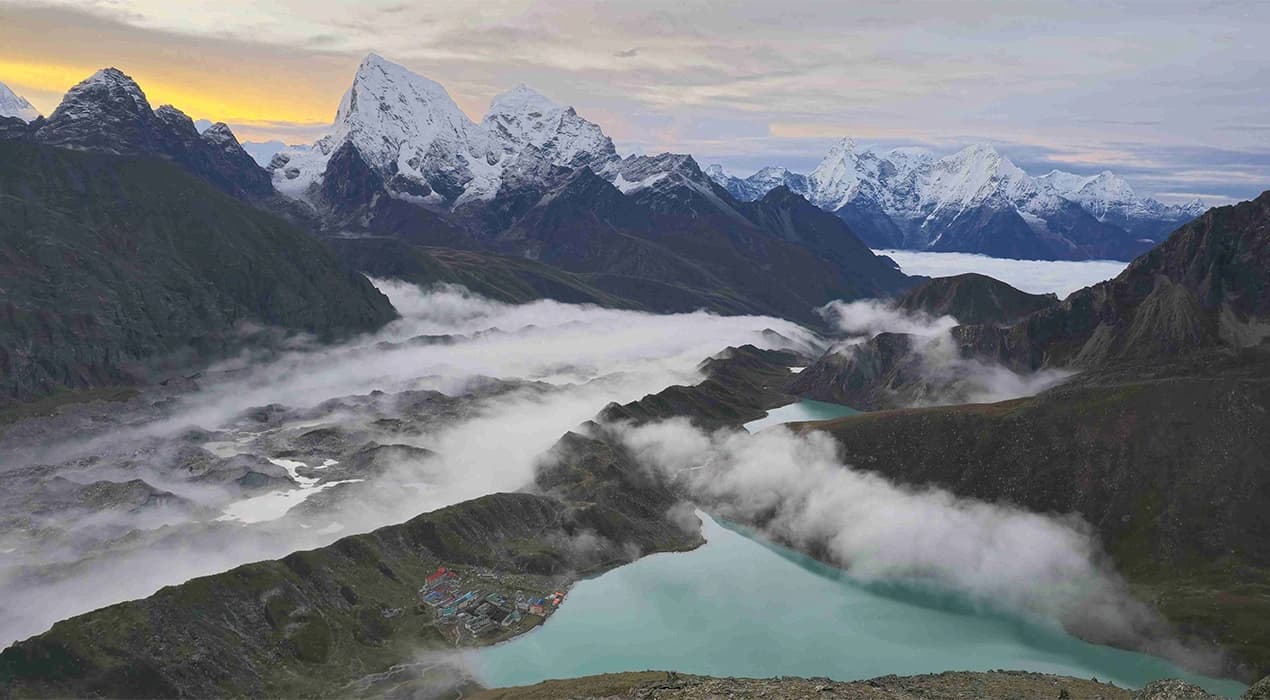
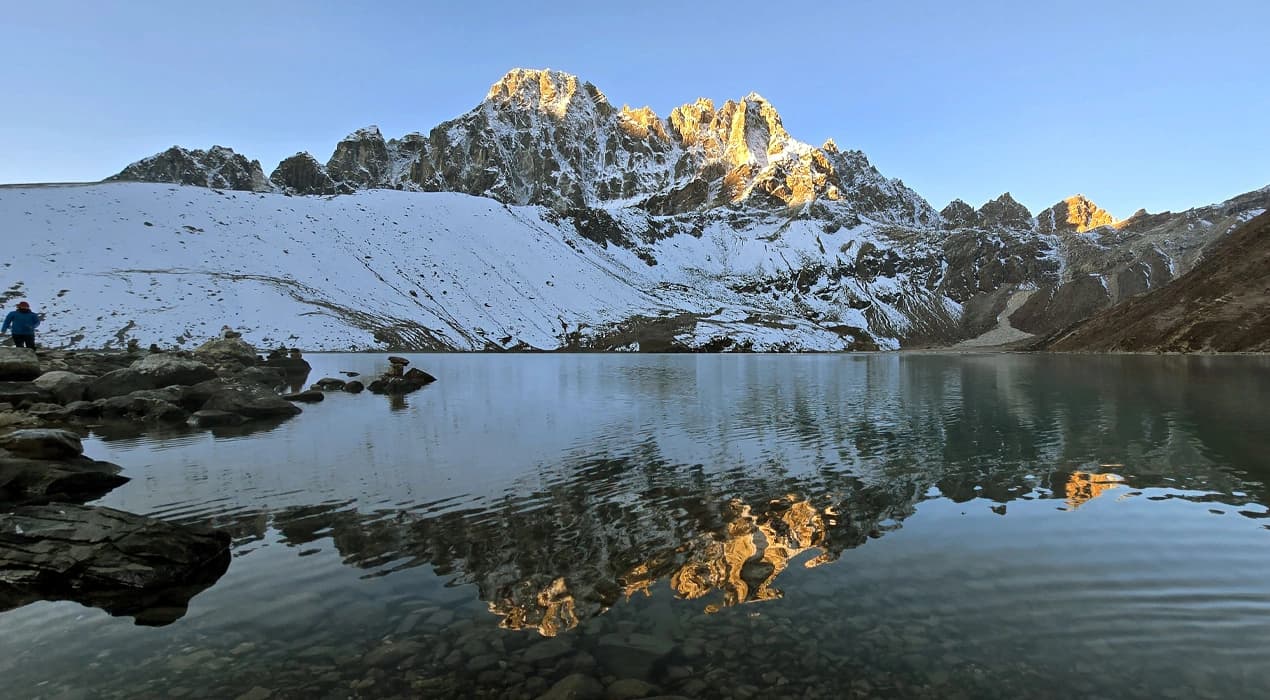
Gokyo Lakes: These entire turquoise lakes separate the stunning white of wrinkled sparkling mountains that surround them.
Gokyo Ri Summit (5,357m): The prime mountain to wake up early for and to see the magnificent sight of the four tallest peaks on earth: Everest, Lhotse, Makalu, and Cho Oyu.
Tengboche Monastery: The monastery is the center of the religious life of the Sherpa people standing a little lofty on a hill and affording beautiful views of Mount Everest and of Ama Dablam.
Namche Bazaar: Event assemblage, it is this hallway that leads into the world of the Sherpas dwelling in folds of Everest, unspoiled landscapes, and thriving culture of the Sherpas.
Far Flung Sherpa Villages: Trekking into interesting Sherpa villages from Phakding, passing Tengboche, and Gokyo, which have uniquely different traditional customs and way of life, will be indeed seated in the lives of these people.
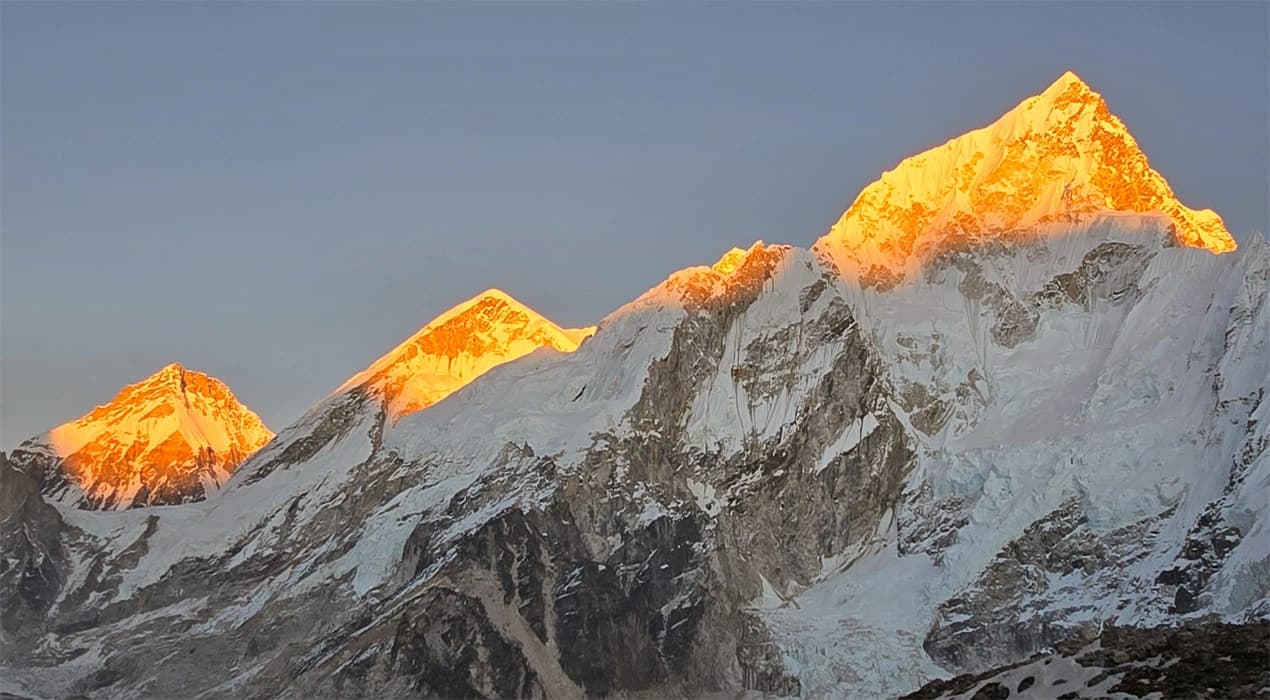
Bright Himalayan Views: Perhaps the most remarkable among the splendid views on the trek is the sight of Mt. Everest, Lhotse, Ama Dablam, Makalu, Cho Oyu, and Nuptse from somewhat higher than the rest.
Three High Passes Trek (Khongma La, Chola, and Renjo La)
- 19 days
- |
- Intermediate


- DestinationTrekking in Everest
- Activities Guided Trekking
- Accommodation Guest House
- Max. Elevation5535m.
- Group Size15+
- VehicleLocal Bus
- MealsBLD
Three High Passes Trek (Khongma La, Chola, and Renjo La) Highlights
19 days Three High Passes Trek (Khongma La, Chola, and Renjo La) Overview
Challenge your perseverance and endurance by embarking on the adventurous journey to conquer mighty high-mountain passes of Everest Region! If you are searching for a trekking package that explores almost every regions of Everest, then the Three High Passes Trek is an ideal choice. The travel planners of the Nepal Trekking Rangers have knitted the best trekking itinerary for travelers to traverse through these arduous landscapes of the Everest region. Our teams of travel planners are highly qualified and seasoned trekking guides who have been working in this field for more than two decades. Trekking with us is always enticing and full of impeccable hospitality.
Book smartly priced trekking package and trek on the challenging trekking course of the Everest Three High Pass Trek in Nepal. At the end of the trek, you will be rewarded with lots of life changing memories. Explore the villages of intrepid Sherpa and immerse into the mountainous culture of Khumbu. The trek is also known as the Khumbu Circuit Trek where you get to explore every nooks and corner of Upper Khumbu region of Nepal.
Popular Three High Passes of Everest Region
There are countless high-mountain passes in the Everest region of Nepal. Among these mountain passes, Chola Pass (5420 m), Renjo La Pass (5360 m), and Kongma La Pass (5535 m) are the most famous ones. These mountain passes are in the outskirts of the legendary Everest Base Camp Trek route. Moreover, these passes act as the natural landmark where you can collect the mini – mountaineering feeling.
Everest Three High Passes Trek Itinerary
The travel planners of the Nepal Trekking Rangers are highly experienced and mountain climbers. Therefore, our trekking itinerary of the Three High Passes Trek is scientific and safe. The major hindrance in the successful trekking in this trekking route is the risk of an altitude sickness. However, our trekking plan ensures that trekkers are fully rested and acclimatized. The pace and the guiding process are highly planned. We go by the book but also assess the field situation. You will not find the authentic Everest Three High Passes Trek itinerary like ours with others as our trekking itinerary is prepared by the locals of Khumbu region.
Clockwise vs. Anti-Clockwise Trek: Three High Passes
There are lots of debates about the possible trekking direction for the Everest Three High Passes Trek in Nepal. Some prefer to go from the Renjo La Pass section while some prefer the Kongma La Pass section as the first mountain pass to climb. However, our team of local Sherpa and travel planners has found that the Kongma La Section is way safer than the Renjo La Section. Trekkers get chance to do two acclimatization activities in the Dingboche Kongma La section but Renjo La Section has one acclimatization day. Therefore, we highly recommend all trekkers to follow our itinerary of the Everest Three High Passes Trek.
Kongma La Pass (5535 m) Crossing
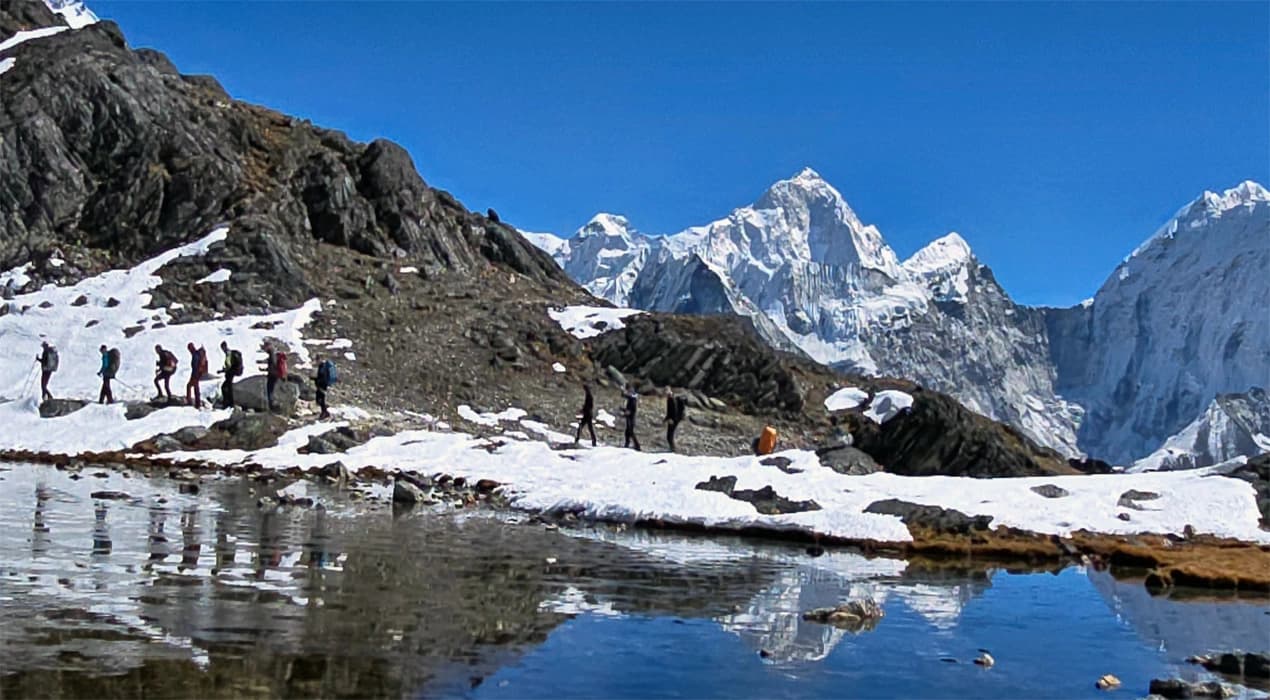
The first pass to cross on the thrilling trekking trip of Everest Three High Passes Trek is the Kongma La Pass (5535 m). Trekkers start the challenging crossing of Kongma La from Chhukung Valley. By the time trekkers reach the Chhukung Valley, they would have already done the acclimatization activities. The highest pass among these three passes is the Kongma La Pass. Despite it being the highest pass, the acclimatization activities included in our Everest High Passes Trek itinerary makes it easy for trekkers. The pass has multiple ridges and a glacial lake. The trail is rugged and narrow but the views of mountains and valleys are unparalleled. Trekkers traverses through Khumbu glacier towards the village of Lobuche.
Everest Base Camp Trek in High Passes Trek Route
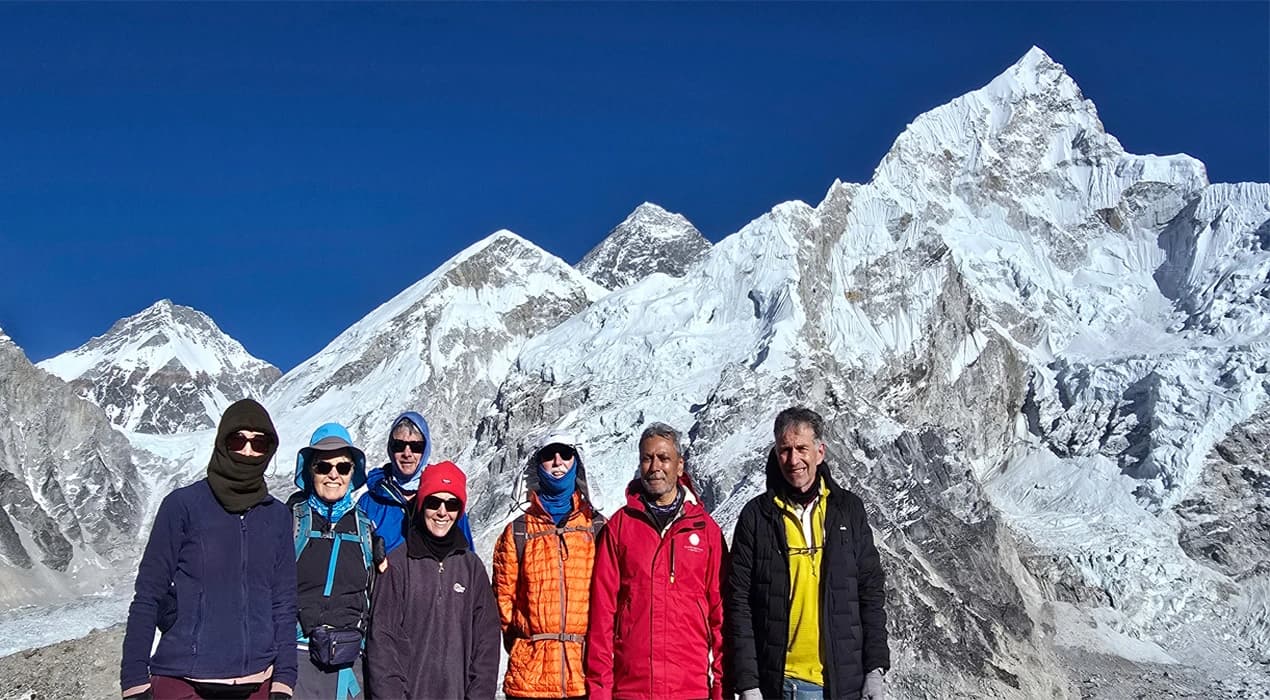
The chance to leave footprints at the world’s tallest mountain Mt. Everest is the bonus activity included in the Everest Three High Passes Trek. Travelers follow the Everest Base Camp Trek itinerary from Lobuche all the way to the Everest Base Camp via Gorakshep. Some people also consider it as the portion of the EBC Gokyo Lake Trek itinerary. Base camp of the Mt. Everest is never ordinary. Knit a momentous tale of reaching the foothill of the world’s tallest mountains like Lhotse and Everest. In addition, trekkers accumulate an enticing sunrise experiences from the top of the Kalapathar (5545 m) before heading towards crossing Chola Pass.
Gokyo Lake via Chola Pass (5420 m)
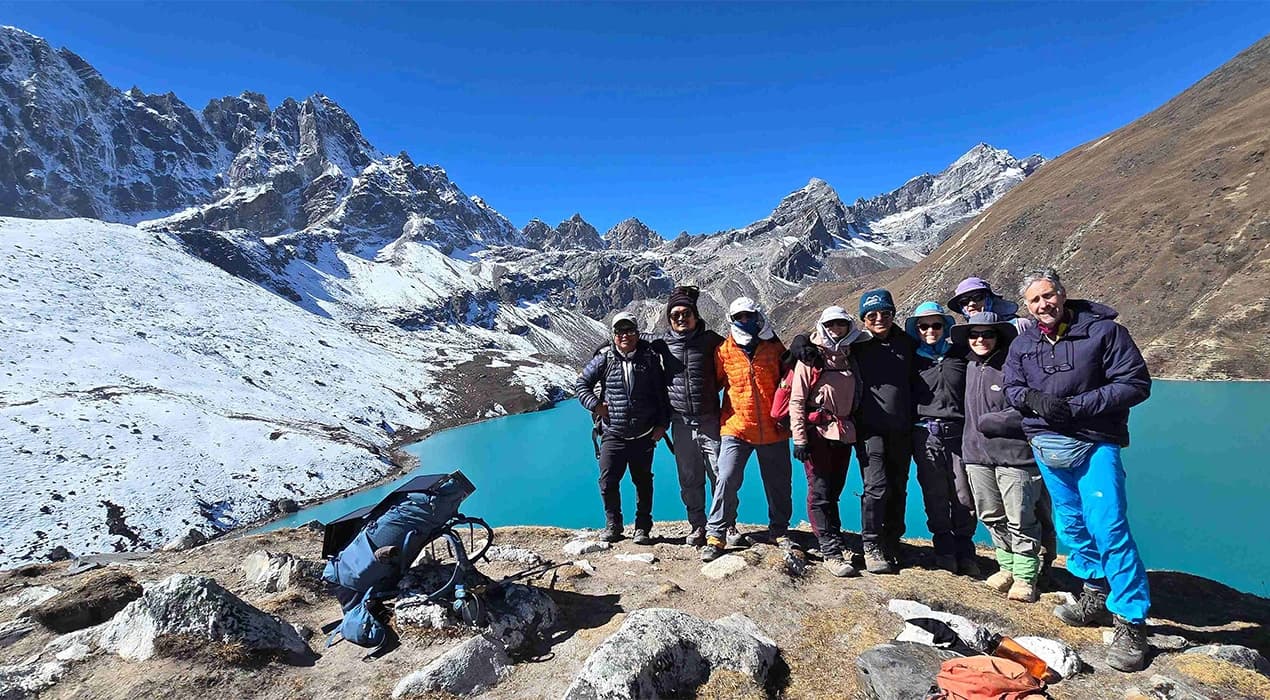
The most popular trekking pass of the Everest region is the Chola Pass (5420 m). The pass separates the Everest Base Camp Trek route and gorgeous Gokyo Valley. In comparison to other trekking passes of the region, the Chola Pass is well trodden. However, in some sections trekkers may have to use the support of fixed rope to navigate. It depends upon the time of the year. The moment of trekking in one of the longest glaciers, the Ngozumpa glacier, is definitely the highlight of the trek. Likewise, the journey towards beautiful Gokyo Valley never fails to enthrall trekkers.
Gokyo Valley Exploration
On the shores of the blue turquoise lake, the Gokyo Valley is one of the scenic places to visit inside the Khumbu region of Nepal. The lake is sacred to Sherpa and acts as the natural sanctuary for wildlife and nature conservation. There are more than 19 lakes in the Gokyo Lake system but the most iconic ones are the five lakes which are believed to be interconnected through underground water seepage. The Gokyo Lakes are listed as the Ramsar Conservation Site as well. The itinerary of the Everest Three High Passes Trek includes activities like Gokyo Ri (5357 m) sunset hike, five lakes hike, and village exploration. Therefore, the journey is not only the Himalayan walking adventure but also a cultural encounter.
Renjo La Pass (5360 m) Crossing
Among three passes of the Everest region, the Renjo La Pass (5360 m) is referred as the rocky pass. The trail to cross the pass is rugged and full of rocky boulders. It is difficult to navigate through these big boulders. However, the scenery seen from the top of the Renjo La is majestic. Trekkers can relish the scenery of four mountains listed as the top ten mountains of the world. These mountains are Choyou, Makalu, Lhotse, and Everest. Relish the 360 degree view of mountains from the top of the pass.
Popular Sherpa Villages on Everest Three Passes Trek Route
The trekking package and itinerary of the Everest Three Passes Trek is designed to form the Khumbu Circuit Trek. From Namche Bazaar to Namche Bazaar, trekkers do the Himalayan circumambulation through iconic Sherpa villages. The Sherpa community is known across the globe as intrepid mountaineers. Almost every household of the Sherpa people has at least one Everest summiteer. Therefore, understanding these people in their own courtyard offers life changing memories. Major Sherpa villages on the Three High Passes Trek route are Lukla, Phakding, Monjo, Namche Bazaar, Phortse, Pangboche, Dingboche, Gokyo, Lungden, and Thame. Three passes trekkers get the rarest opportunity to observe Sherpa people indulging in mundane household chores. From their monasteries to their farmlands, trekkers can get fulfilling chance to understand this community inside out.
Why book the Everest Three Passes Trek with Nepal Trekking Rangers?
The trekking crew members of the Nepal Trekking Rangers are the locals. Yes, the agency always assigns the locals with the trekking guide license to operate trekking trips. The agency employs locals of the trekking region to ensure authentic information and safety. In addition, the agency’s policy is to maintain sustainable tourism activity helping the locals of the host destination. It has helped greatly in creating an amazing harmony between foreigners and the locals. Our motto is to provide impeccable hospitality and quality services to our valued clients. We intend to provide three fold returns on the investment made by our clients in the trip. Therefore, the Nepal Trekking Rangers is an ideal trekking agency to book the Everest Three Passes Trek. At an affordable rate, traverse the Khumbu Circuit Trek in Nepal.
Three High Passes Trek (Khongma La, Chola, and Renjo La) Itinerary
The trekking team, Nepal Trekking Rangers, will welcome you to Tribhuvan International Airport, Kathmandu. After which they will transfer you to your hotel for some rest and recovery from a long-distance journey.
Of course, should you arrive early morning, walking around the busy streets of Kathmandu, or visiting a couple of interesting cultural sites, for example, Swayambhunath (the Monkey Temple) or Durbar Square, are good options. This day is set aside for acclimatization and last-minute preparations for all the tips to take for trekking. Getting ready for the initiation of this new and exciting adventure!
If the provided schedule isn't suitable for you, we are able to create personalized travel arrangements according to your preferences and requirements.
Choose Your Package
(Guide. Porter. Permits. Transportation. Accommodation)
Cost Includes
Transportation
International/Domestic Airport pick up and drop with Private Vehicle with A/C as per Group Size
Domestic Round-Trip Flights (KTM-LKL-KTM) OR (RAMECHHAP-LKL-RAMECHHAP)
Drop and pick up from and to Ramechhap by private vehicle as per group size If Flights schedule via Ramechhap
Accommodation
2 Nights Accommodation at Tourist Standard Hotel or Boutique in KTM with Breakfast
16 Nights Accommodation along the trek (Basic and normal accommodation in Guest Houses or Tea Houses and Attached bathroom in Lukla/Phakding/Namche-3 Nights)
Food/Drink/Snacks
Not Included
Permits and Expenses
Sagarmatha National Park Entry Permit
Pasang Lhamu Rural Municipality Permit
All Local Government Taxes and Official expenses
Guide and Porter
Government Register Licensed holder Guide with fluently speaking English Language
An Assistant guide each 7 Trekkers
A porter for each 2 clients (20 KGs limit weights for a Porter)
Covers their (guide and porter) wages, meals, hot drinks, accommodation, transportation, insurance and necessary trekking gears)
Souvenir or Complimentary
Nepal Trekking Rangers Company’s T-shirt/Cap/Buff
Trekking Route Pocket Map
Benefits
NTR’s Duffel Bag each client (return basis)
Sleeping Bag and Dawn Jacket (return basis) If you require
Cost Excludes
International Flights Fare
Nepal Entry Fees (15D-$30, 30D-$50 and 90D-$125)
Accommodation
If you stay more than 3 nights in Kathmandu
Extra Nights even you return early with any Reasons such as AMS, Illness and any reasons of clients
Food and Drink
All Food and Drink (Breakfast Included)
Tips
Guides and Porters as gratitude
Travel Insurance and Expenses
Travel Insurance covers emergency High Altitude Rescue/Evacuation (upto 6000m)
Personal Transportation of ground and Air both
All soft and hard drinks, All hot drinks in pot size or above 4 cups a day, Snacks, extra Chocolate bar
Sanitary material such as wet wipe tissues/toilet paper
Hot Shower/hot or boiled water, Wifi, Battery Charge
Hot bag during the nights
Shopping/Souvenir for family and friends
All the extra things/expenses which has not included in the list
Dates & Prices
Your private Three High Passes Trek (Khongma La, Chola, and Renjo La) begins from and ends in , covering 19 days of adventure.
We organize exclusive trip for two or more, ensuring a personal and flexible experience.
Private Group Deals
| 1 Person | US$ 1850 |
| 2 - 6 Person | US$ 1370 |
| 7 - 14 Person | US$ 1330 |
| 15 - 30 Person | US$ 1295 |
Know Before You Go
Why Choose the Three High Passes Trek?
The Three High Passes Trek in Nepal is among the top adventure destinations reserved for professional trekkers. This great high-alpine trek is an unbeatable combination of difficult topography, magnificent views of the mountains, and the true flavor of the Sherpa culture. It is why you should choose it as one of your top experiences:
Unrivaled Mountain Views:
For sure one of the best reasons to make the trek to the Three High Passes is the unrivaled view of the tallest mountains in the world. The trekker can have a view of Mount Everest, Lhotse, Makalu, Cho Oyu, and Ama Dablam all in one panoramic view. The treks into remote areas, where probably the texture of their landscape will be formed by mighty peaks, glacial lakes, and untouched nature - a true Himalayan paradise.
Climb the Three Great Passes: Khongma La, Chola, and Renjo La:
Three High Passes Trek is a trek that is recommended to experienced trekkers who are taking another challenge in themselves. It involves the crossing of Khongma La (5,535m), Chola Pass (5,420m), and Renjo La (5,360m), all with a degree of individuality in the challenge involved. It offers challenges, as these passes would like to test an individual not only in terms of endurance but also show some of the exotic and most remote scenes in the Everest region. For any trekker, passing all three becomes a feather in his cap.
Experience Sherpa Culture:
Trekking and even cave village to cave village within the area's winds, but ultimately trek into the valleys where they have extensive descriptions of the culture and lifestyle heritage of the Sherpa people. This trek, from the energetic Namche Bazaar to the pilgrimage site Tengboche Monastery, epitomizes the culture, Buddhism, and local life of the Sherpa people. Local tea houses become the dormitory of the trekker and merge their experiences into that of villagers to enrich trekking itself.
Escape to the Gokyo Lakes and Gokyo Ri: The Calm:
The trek includes a visit to several azure glacial lakes, Gokyo Lakes, which are embraced by mighty peaks. Their odyssey from the high-mountain passes is an immaculate contrast to the haute-mountain picturesque nature. Of course, the pinnacle of all panoramas, including that of Everest, Lhotse, and Makalu, can be found atop Gokyo Ri at a height of 5,357.
Isolation: More Remote Experience:
Unlike most crowded trekking routes Everest Base Camp Trek, the Three High Passes inspire a more remote and unoccupied experience. This indeed helps out considering the trek less likely to be done by others to enjoy that Himalayan beauty in peace and solitude, feeling more connected with nature.
Adventure for Experienced Hikers:
This trek is for those wanting to attain the next level of trekking by hiking for long summer days on mountains, heading toward a high point, three passes, with the associated geography making it one for physically fit and more experienced high-altitude trekkers. You will find rocky terrains, steep ascents, and thin air as you trek through those passes, yet the feeling of accomplishment while crossing each pass is unmatched.
Trekking Beyond Everest Base Camp:
The Three High Passes Trek, while being iconic, takes you beyond the crowds and into lesser-known lanes and hidden gems. After this trek, the Everest Base Camp challenge can be followed by crossing all other high passes, and a whole different world opens up.
The Ultimate Himalayan Challenge:
So, if you are seeking a trek that merges adventure, slap-you-in-the-face vistas, and challenges at high altitude, as well as immersion in the local culture, then the Three High Passes would be the ultimate.
Can Beginners trek on this Route?
The Three High Passes Trek is certainly exhilarating and adventurous, one which would ideally demand an experienced trekker to undertake. Although first-time trekkers may try it, it is very important to agree that trekking would include crossing three high-altitude passes, Khongma La (5,535m), Chola Pass (5,420m), and Renjo La (5,360m, a pretty physically straining affair in reality.
There are steep ascents, rocky trails, and altitude sickness risks, making it hard for those without some experience in high-altitude trekking. Add to that a challenge of about 18 days that require endurance and stamina to combat very many hours of hiking, often under not-so-great conditions. Beginners should have good fitness bases -including cardio endurance and strength for those nut-busting, high-elevation climbs- and some experience in high-altitude trekking for proper acclimatization.
Hiring a guide and porter will certainly mitigate these challenges, but beginners should consider tackling some easier treks in the Everest region before undertaking the Three High Passes. In conclusion, it could be noted that beginners can trek in this way, though it is a tough trek requiring ample preparation and experience along with safety.
Preparation Tips for the Three High Passes Trek
Some of the most difficult trekking in Nepal is bound to be gained by trekking through the Three High Pass, as visiting Nepal will be one of the most difficult yet rewarding treks with stunningly beautiful views of the Everest region. Due to the extreme and severe nature of the undertaking, preparation has to be made as carefully as possible to secure a safe and lived experience.
Consider these few pointers for your preparation:
It's All About Being Physically Fit:
The long hiking days during the Three High Passes Trek are spent at really high altitudes, but many times in stinging conditions. So, to prepare yourself physically, instead of having long runs or cycling, the best form of cardio exercise is swimming to develop some endurance. Such activity should be complemented by strengthening legs and core with squats, lunges, and step-ups and preparing the upper body to deal with the steep ascents and descents. Of course, endurance training is even more important because trekking records 18 days of walking with some considerable gain in altitude.
Acclimatization is very important:
Acclimatization is also very crucial in trekking preparation because of the high altitude trekking that it has to do with. This one takes you to an altitude of over 5,000 meters above sea level, wherein the air gets thinner, and the chances of altitude sickness increase. Hence, plan for rest days in places such as Namche Bazaar and Gokyo before heading further afield because they will help you acclimatize to altitude before you move higher. Headaches, dizziness, or nausea are commonly seen as symptoms of altitude sickness, so it's better to listen to your body and be prepared to go down again when need be.
Experience in High Altitude Trekking:
If one has not trekked before, it is encouraged that they "put in some miles" on high-altitude treks before attempting the Three High Passes trek. A lower-level trek into the Everest Region might be advisable, like the trek into the Everest Base Camp, as preparations for altitude and terrain. Some of the workouts that challenge your body to lofty heights will indeed prove useful for anyone in paying off the dues incurred by the Three High Passes systems. It will be quite a pleasant experience.
Proper Equipment and Gears:
Having the right type of gear is fundamentally essential for a smooth trek. Hereunder are mentioned some important things in the checklist:
- Trekking Boots: Well-fitted, sturdy, good ankle support boots are essential.
- Clothing: Layered clothes are paramount under different temperatures. Include a waterproof jacket, fleece, gloves, and hat.
- Sleeping Bag: Sleeping bags of four seasons would keep you warm during the cold nights in the mountains.
- Trekking Poles: Great for balancing across steep sections and uneven terrain.
- Sunglasses and Sunscreen: Protection from the sun up high at altitude: wear big UV protection sunglasses and use sunscreen.
Train for Steep Climbs and Long Days:
The Three High Passes Trek can often demand a heck of an uphill fight. Hiking on inclined trails or stairs might be beneficial to build strength in the legs. Also trains you for those long endurance hiking days, sometimes, having to walk 7-8 hours daily. Work hard: you're going to need tons of it during the trek.
Mental Preparation:
The Three High Passes Trek is at once very physically and mentally serious. Altitude, fatigue, long days of trekking, and the roughness of terrain can take a lot more feed on the mind. Now, preparing in the head for a trek like this means getting yourself into a mind of patience, perseverance, and most importantly, the ability to keep oneself up and running in negativity. Meditation or mindfulness-type techniques can benefit control of stress and focus throughout the trek.
Travel Insurance and Emergency Preparedness:
Travel insurance is also essential to providing evacuation and medical care in emergencies while partaking in high-altitude trekking. It happens that after enjoying this solitary environment, accidents occur, and it can save someone's life if such a situation should arise. Be sure that the insurance package also carries evacuation by helicopter in cases of altitude sickness or injury.
Hire a Guide and Porter:
Even though the trek of the Three High Passes can successfully be done by a person alone, hiring a licensed guide and porter will increase comfort and enjoyment in itself. A guide of course comes with his valuable knowledge about the trail, and especially with his cultural insight and security measures taken. A porter takes care of the heavy stuff and makes a hike much more comfortable so that you can deal better with the physical demands such long days impose on you. Local guides and porters also add an extra layer of safety to the trek because they know emergency procedures.
Prepare for Conditions in Very Remote Areas:
Everest region is such a remote area that supplies and access to medical treatments become poor here. Thus, have plenty in stock of basic things like snacks, purification tablets, and first-aid kits. Also, remember that simple comforts come with limited amenities in tea houses and are at their top ends with few hot showers and no electricity.
Best Time to Trek
Finding the right time for the Three High Passes Trek means that not only should the environmental conditions yield favorability, but safety should be a consideration further. The Everest region provides diverse weather patterns throughout the seasons, with every season presenting its advantages and challenges.
Spring (March-May):
Springtime marks the refreshing and ideal time to go for the Three High Passes Trek. The weather is believed to stabilize with a clear sky, adding the classic time to savor the views of several high mountains, including Everest, Lhotse, as well as Makalu. Temperature highs are expected to linger not far away from a comfortable 15-20 degrees Celsius. Evenings and overnight temperatures drop below 0 degrees; however, they present no midnight freeze; the driving mornings usually are more refreshing.
The dry air that lifts from mountain peaks forestalls altitude sickness that first occurs in the presence of humidity, with overly damp ground the cause of trouble. Spring trekking is the main trekking season for the same reason, the trekking trail may become very crowded, offering many exaggerations to be welcomed by the accommodation, and meeting other trekkers. Unsurprisingly, the rising demand for permits, flights, and accommodation leads to an escalation in costs.
Autumn (September-November):
Another best time for trekking on the Three High Passes Trek is in autumn. The monsoon will be behind us, considering the beautiful air that instills a sense of amazing mountain views with the bright sunshine that makes the daytime for hanging out in the 15 degrees Celsius environment. The best thing about trekking in autumn is walking in paradise for nearly three years. A nearly perfect trekking condition exists here: dry trails, cool temperatures, and great weather.
Accordingly, this time of year is less crowded, and hence one can trek more calmly. Advantageous aspects of an autumn trip include fewer trekkers and reduced accommodation and flight prices. The disadvantage seems likely to be the temperature getting so low in the mountains, mainly at night.
Winter (December to February):
Choosing to trek in winter can thus be the most excellent consideration. Winter trekking is quieter and almost deserted; the use of cold and very bitter temperatures, however, may make it very difficult when trekking in the Everest region because the altitude is dangerously freezing. Heavy snow falls during this season, and one might find some tricky areas of the trail in ice.
The winter is peaceful, as fewer trekkers on the trail make it different from other times, but considerable preparatory measures such as warm clothing and gear for enduring the freezing conditions must be made. A beginner is not recommended to trek during the winter since it requires an extremely cold weather experience and extremely unfriendly weather conditions.
Monsoon (June to August):
It is the monsoon season, stretching from June to August, under which this trek is least preferable. Heavy rain falls in these months, forming muddy, slippery paths, having a heightened risk of causing landslides in high and exposed areas. Constantly wet weather decreases visibility. Sceneries that once stood clear with a view of the mountains now tend to get permanently shrouded with clouds.
In addition, the humidity is very high, and trails are often very uncomfortable. Even though fewer trekkers undertake the route during this time, unfavorable conditions make it safer to trek with less enjoyment.
Three High Pass Trek Difficulty
The trek known as the Three High Passes Trek is a challenging venture in light of its going on for long trekking days, high altitudes, hard terrain, and sporadic weather. The following is a brief note of its major difficulties:
High Altitudes:
Three of the high passes of this trek are all above 5,000 meters. At that height, the air is thinner, a risk factor for altitude sickness. Acclimatization days become important for every trekker to be able to adjust to the surroundings.
Long Trekking Days:
The trekking day is expected to go for six to eight hours, with ascending and descending steep paths being a constant. Roughly 18 days of trekking translate to being physically intense with great endurance and stamina to conquer long and arduous trekking days.
Challenging Terrain:
The trail comprises rocky, steep, narrow, and rugged terrains. Being slippery with ice or snow in some sections, especially in winter, increases the degree of difficulty of the trek.
Climate Conditions:
Uncontrollable weather comprises cold temperatures and intermittent snow, which adds to outright difficulty in trekking; still, this is more so during winter and the early spring months.
Trekking Permits
Trekking in the Everest area has some permit requirements, including the Three High Passes Trek. The significant permits allow one to engage in trekking and are as follows:
Sagarmatha National Park Entry Permit: This is a compulsory entry permit for those intending to trek inside the Sagarmatha National Park, where lies one of its major trekking routes--the, the Everest Base Camp.
TIMS: It is a Trekkers' Information Management System Card that all trekkers must have while in Nepal. It's to track your movement for the safety of and within the country.
Special Permit to Gokyo Lake: For trekkers entering the Gokyo region, this special entry permit is required under the Gokyo region.
Khumbu Pasang Lhamu Rural Municipality Permit: It is a must for entry into parts of the Khumbu area, including some high passes.
Trek Permits are obtainable from the offices in Kathmandu or Lukla and displayed at various checkposts along the trek. Organizing these through a reputable trekking agency is strongly suggested for convenience and speed in processing.
Food, Water, and Accommodation
Food:
Most of the food along the Three High Passes Trek route is eaten within teahouses and lodges. Traditionally among many, including dal bhat (lentil soup plus rice), momo (dumplings), flavored noodles, etc, and other foreign delights like fried rice, pasta, and, mostly at the lodges along the trek, pizza, they have lots of traditional Nepali dishes on their menus.
Usually, as one climbs higher, the appetite becomes smaller, diverting energies toward meals enriched in carbs and proteins. There are many such vegetarian dishes as well; conversing about it with the tea house owner would help so he can prepare for your diet.
Well, the food is said to be improved as one goes down, but they should remember that all meals here are simple and give the needed nutrition while acclimating and energizing for the trek.
Water:
Generally, water on the Three High Passes Trek is sucked up through the tea houses which give boiled forms of water premised on safety for consumption. Most of these places will boil the water and offer it to the trekkers for a small price. To be more careful, several trekkers prefer using their water purification tablets or filters to keep the water out of contaminants, especially as one moves to the more wandering parts of the trail.
Untreated water taken from streams or rivers can make one sick with waterborne illnesses. Staying hydrated is all the more important in higher altitudes where the dry air could dehydrate you in a faster time, so always make sure you have a good source for filling your bottles up repeatedly throughout the day.
Accommodation:
Very basic tea houses and lodges for accommodation are available along the Three High Passes Trek throughout most of the trail. The rooms are mostly of dormitory style, along with bedding facilities, either a simple sleeping bag or blanket.
As one gets higher up, accommodation becomes more basic, and the facilities may be altogether rudimentary in really remote places, whereas the toilets may typically be the common kind, and showers are available at lower elevations. Hot showers might not be assured at higher altitudes, and in many cases, the water may be cold. In most cases, the tea houses heat the room, or they might install a stove for warmth on cool evenings. Wearing something comfortable customarily is deeply recommended.
Enjoying a hot beverage such as tea or coffee while cozying up in the tea houses makes for a wonderful idea during cold evenings and mornings. Even if basic, these accommodations serve as a warm comfort after long hours of trekking, thereby offering much-deserved relief along the journey.
Cultural Insights
Sherpa Culture:
The Everest Sherpas also refer to themselves as aboriginal and claim all their accolades to mountain skills and a never-say-die spirit. Their life is mostly around Buddhism. This spirituality is reflected in the innumerable monasteries, stupas, and prayer flags scattered throughout the trail. Sherpas tend to be very cooperative and friendly, welcoming; thus, trekkers would also have to do a friendly "Namaste." Mountain people have a lot to do with the mountain ecosystem. Their relationships with nature are mostly embedded in Buddhist beliefs. Bright-color jackets and woolen hats, coupled with Nepal's normal uniqueness, add color to the life China has while among the Sherpa villages.
Monasteries and Prayer Flags:
You will find very many monasteries and stupas along the trekking path, including that of Tsengboche Monastery. Monasteries and stupas that established very important shrines for the Sherpas became very important holy places for them. Their proximity makes it possible to offer hiking opportunities to people wishing to embrace Buddhism, including monks and nuns whose combined purpose is daily rituals and prayers, as well as meditation.
Pray flags flutter in the wind; suspended images of possible signs of people praying flags that carry prayers and blessings to the heavens, and more valuably those colorful little flags, which represent peace, compassion, strength, and wisdom. The reason the elevation you will be climbing will make you understand the utility of such religious symbols and how the fabric is braided with daily life.
National Festivals and Traditions:
Of all the Buddhist festivals that the Sherpa community observes, the most major are Losar (the Tibetan New Year) and Tihir (the Festival of Lights). These festivals will fill the place with rituals, dancing, and music, the best times to observe local culture very closely by trekkers. Some of these villages will have many small localized festivals; usually, these ties will give the very best entertainment in watching the traditional dances, songs, and gatherings, which together contain much of what Sherpas are.
Language and Religion:
Sherpa is the main language on the trek; however, it is not a Nepali language but a Tibetan dialect. Buddhism dominates; Tibetan Buddhism makes its mark even in the monastery architecture as well as the numerous prayer wheels, stupas, and sacred places along the way. Hinduism too is present as one of the low-altitude trek sections, and shrines and temples are dedicated to various Hindu deities.
Local Food and Accommodation:
The hospitality of the Sherpa people is one of the highlights of this trek. Tea houses and lodges do not exist as sleeping places but as cultural exchange venues. The Sherpa would like to tell their story through their traditions, local dishes, and warmth and comfort over these cultural interactions as members of a family. That is how strong the sense of Everest community is. And welcome to be part of evening local prayers, storytelling over long nights with local people, or simply watch cultural tea gatherings.
Handicrafts and Souvenirs:
From handmade shawls to wooden carvings and traditional jewelry, you will find all sorts of traditional handicrafts in the course of the trek. It is a good source of Sherpa culture souvenirs and thus supports the local economy. Yak wool, particularly popular, makes great souvenirs that are very useful, such as blankets, gloves, and socks.
Traveller Review
His quite nature, and taking care of things when and where required.
I spent over one month with Yuddha, his wife and team of assistants on treks and religious travel namely i) Annapurna , 5 days ii) Pokhara and Muktinath, 8 days and iii) Everest Base Camp and Three Passes, 19 days. I must say that my wife and I had wonderful time with Yuddha and his family. Yuddha is a true professional and goes out of way to make things happen. During my time there were several weather related events but Yuddha was able to find solutions for each adverse situation and allow us to continue our journey. He is flexible with timeline, providing facilities and help. My wife also stayed with his family while I was on trek. She thoroughly enjoyed the hospitality provided by his wife. 
Prakash B 20th Oct, 2026 Great holiday on the roof of the world
Yuddha the company owner has taken care of everything from domestic flights to car transfers, hotels etc. He has put together a very individual trip that has left nothing to be desired. Also the hike Anapourna Circuit was perfectly organized. I can only recommend this company to anyone who wants to travel to Nepal individually. 
Laura B 12th Aug, 2026 A Guide Who Truly Spreads Light
Yuddha is the best guide I have ever met. He is sensitive, very experienced, and always cheerful. He answered my questions with openness, honesty, and kindness. He paid close attention to our group’s needs, and I felt completely safe under his guidance. He booked wonderful accommodations for us and handled the meals very professionally as well. I hope I’ll get the chance to hike with him again — I really miss our conversations. 😊 
Ghyzsofi 12th Aug, 2026 Highly recommend
I had an amazing experience trekking in the Everest region with Nepal Trekking Rangers. What truly made this journey special was Yuddha. I first met him as a customer during the trek, and by the end of the trip, we had become friends.Yuddha was incredibly supportive, knowledgeable, and attentive throughout the experience. Even after the tour ended, he continued to check in and offer extra care and help, which really meant a lot. His information, guidance, and genuine concern made the whole trip smooth and memorable.He is a truly nice guy—down to earth, mellow, and easy to be around. You can tell he genuinely cares about his clients and his work. I highly recommend Nepal Trekking Rangers and especially Yuddha to anyone planning a trek in Nepal. I sincerely hope his business continues to grow strong—he deserves it. 
Tia 15th Oct, 2025