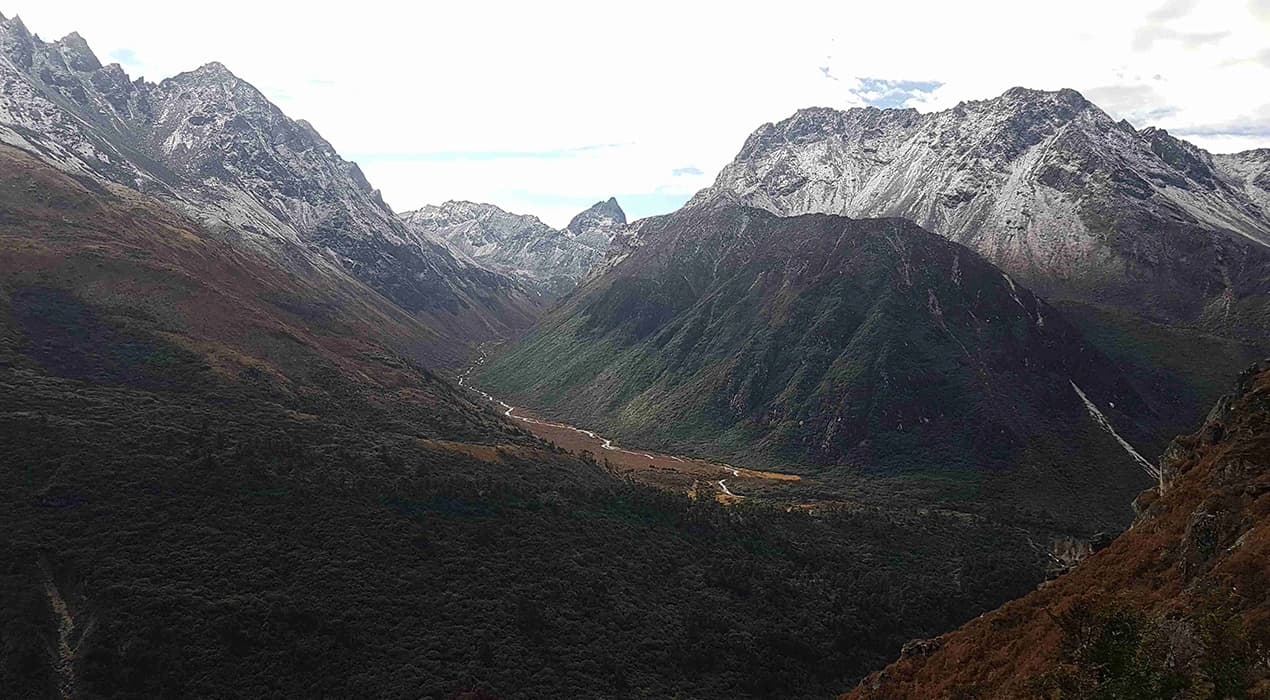
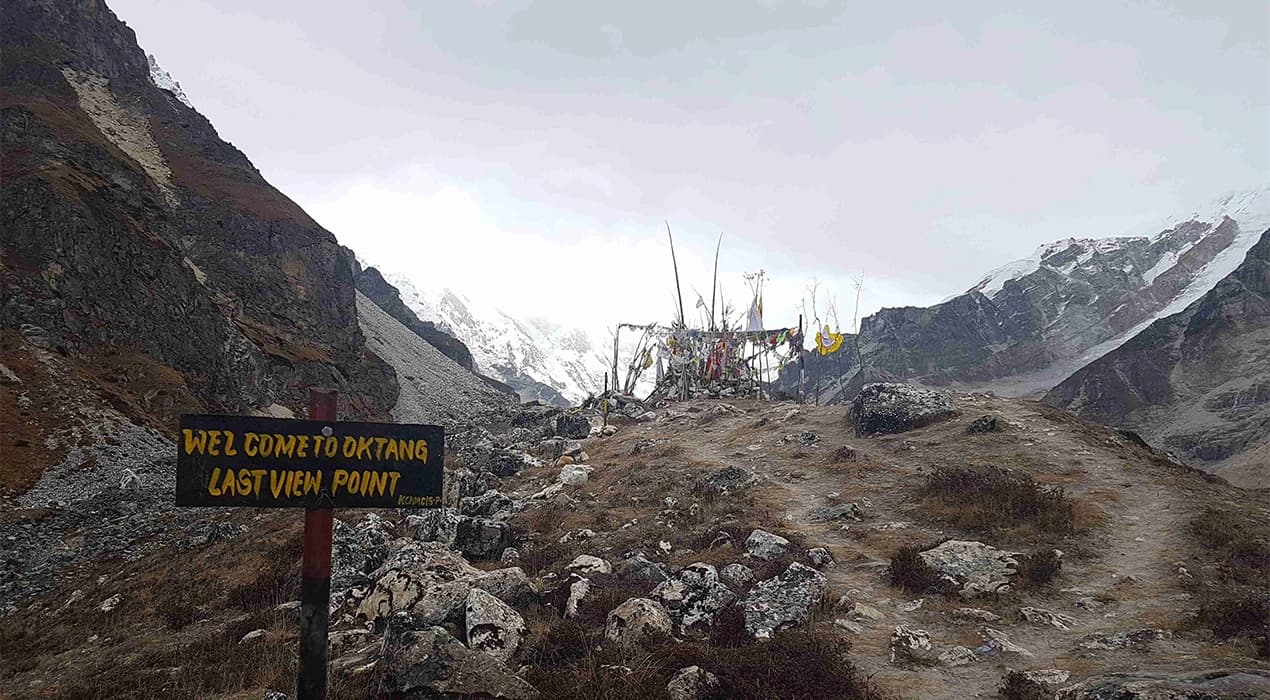
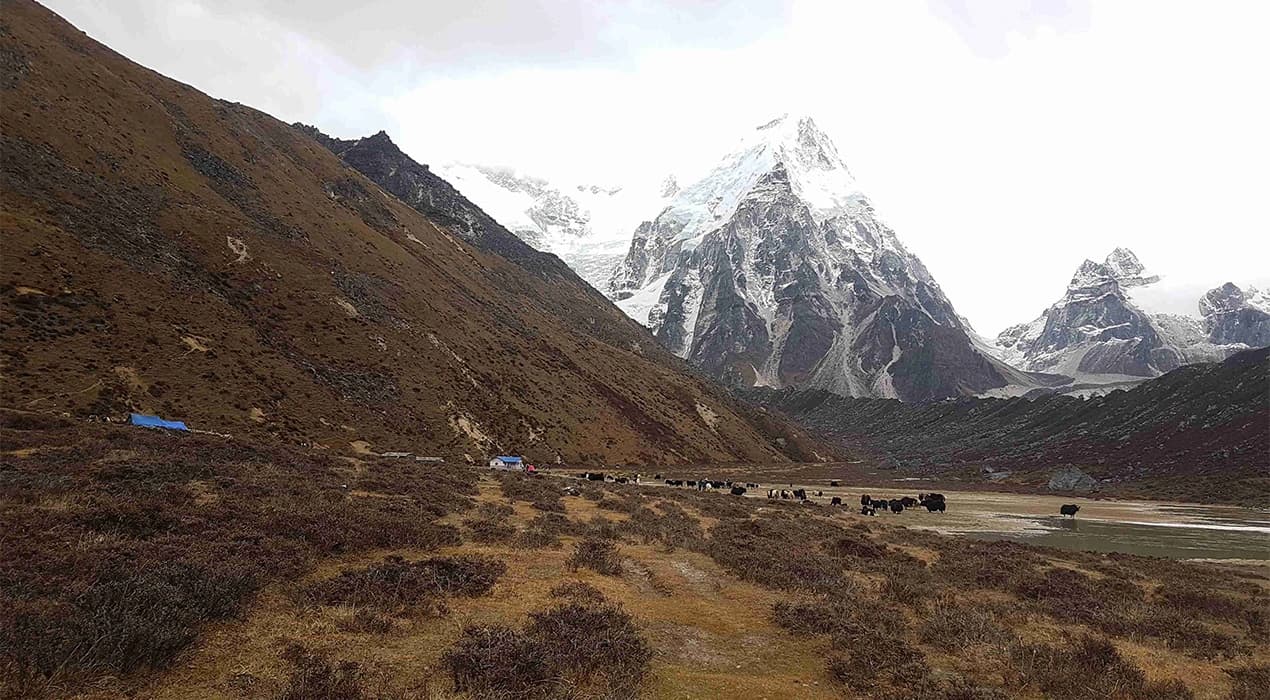
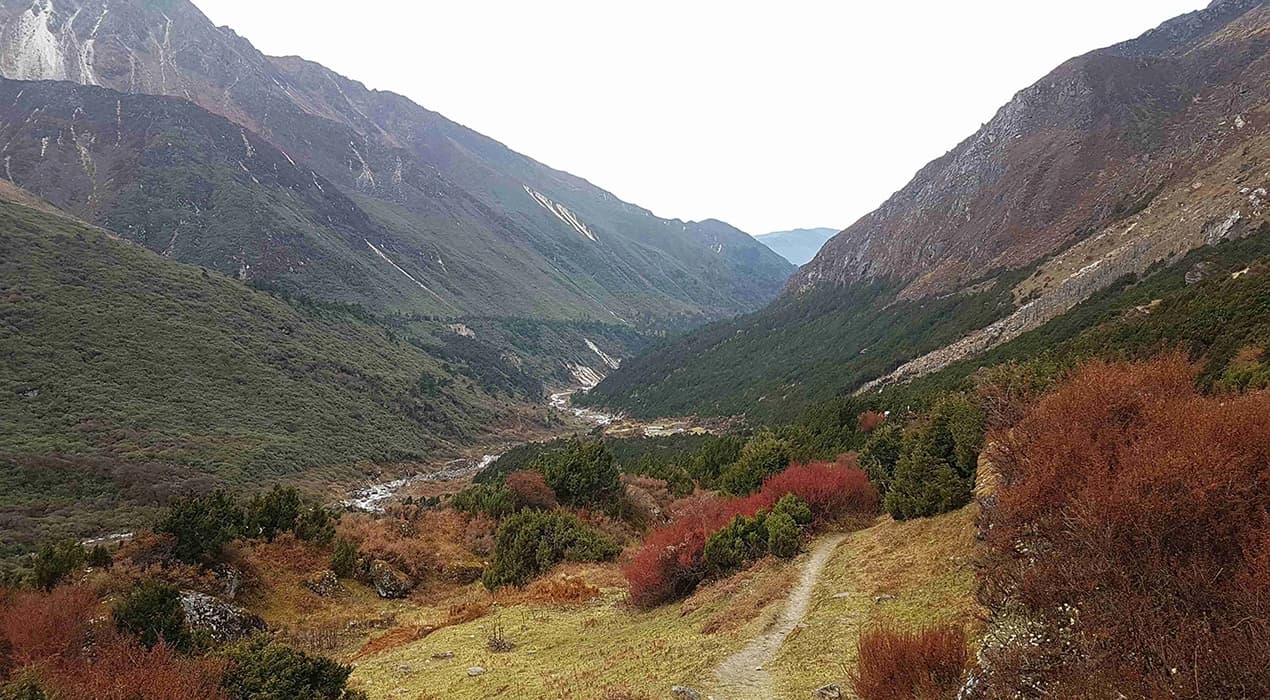
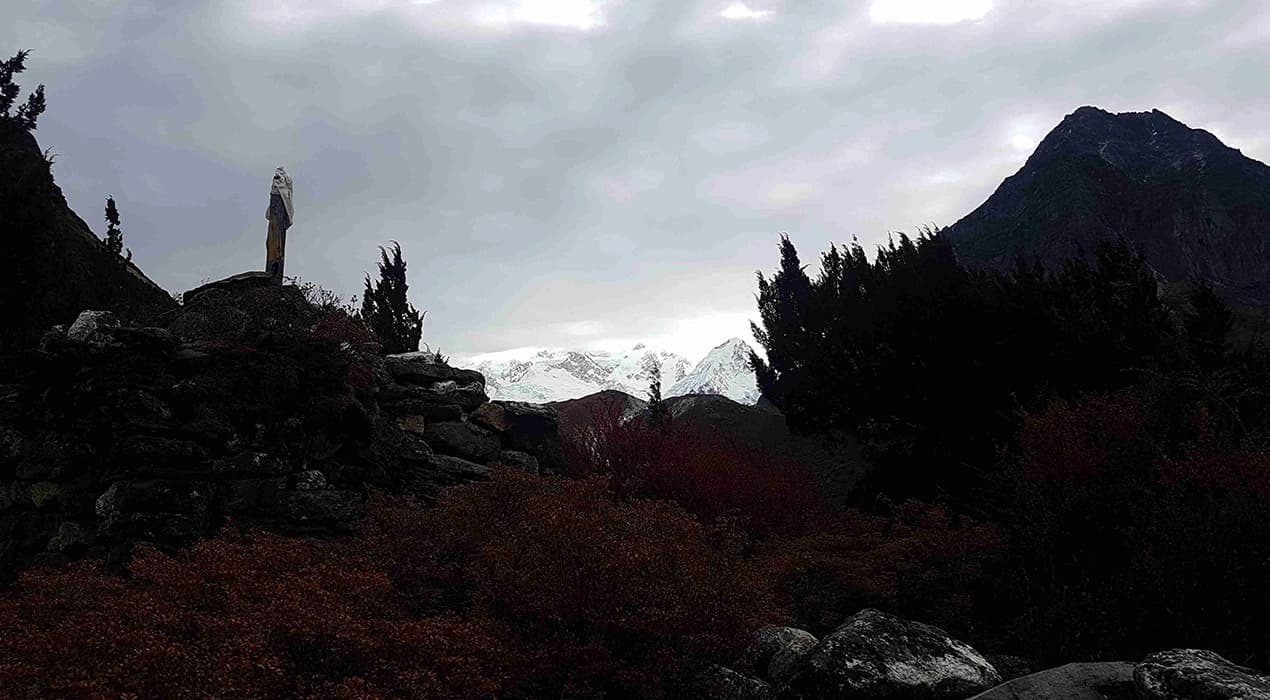
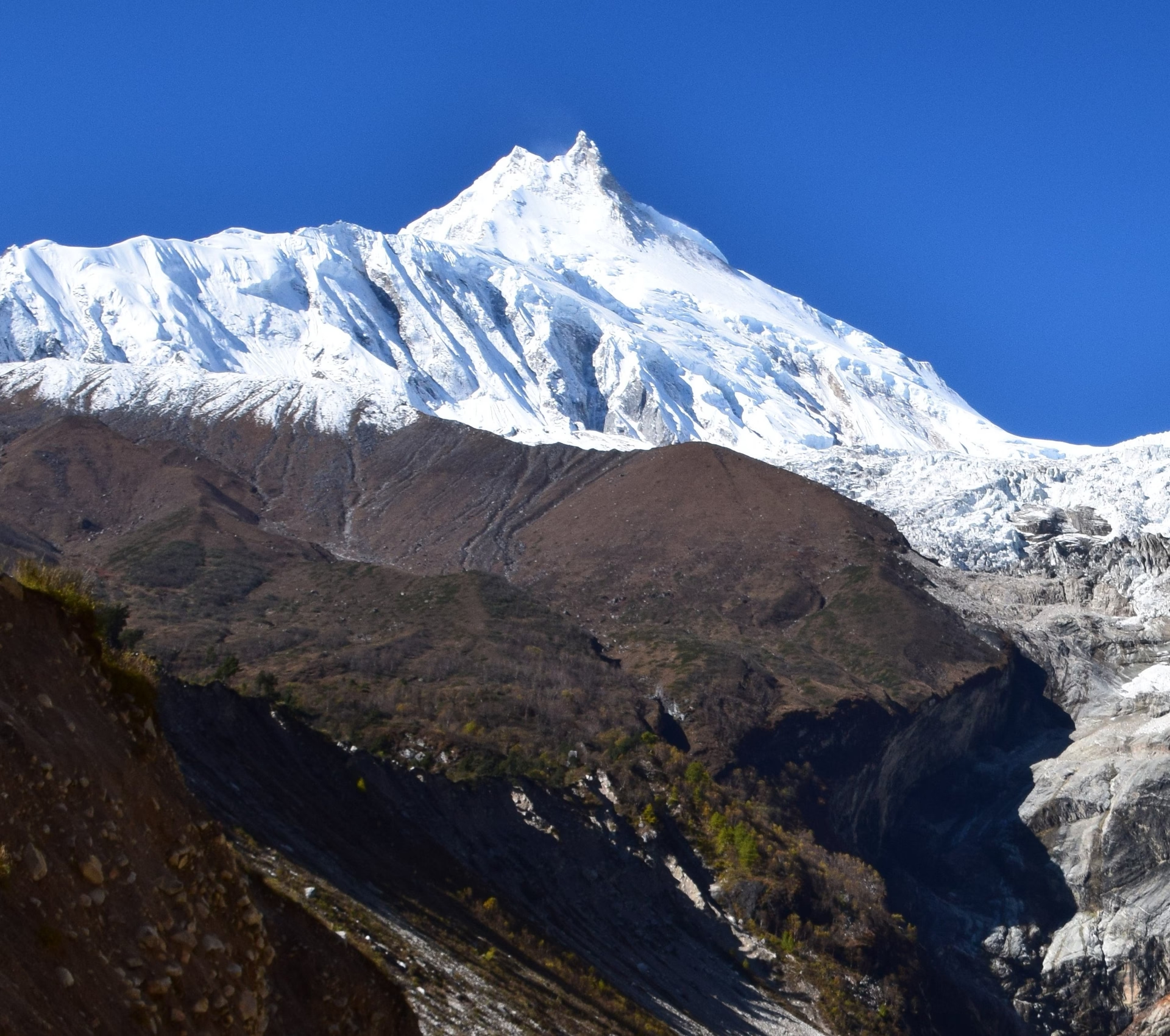
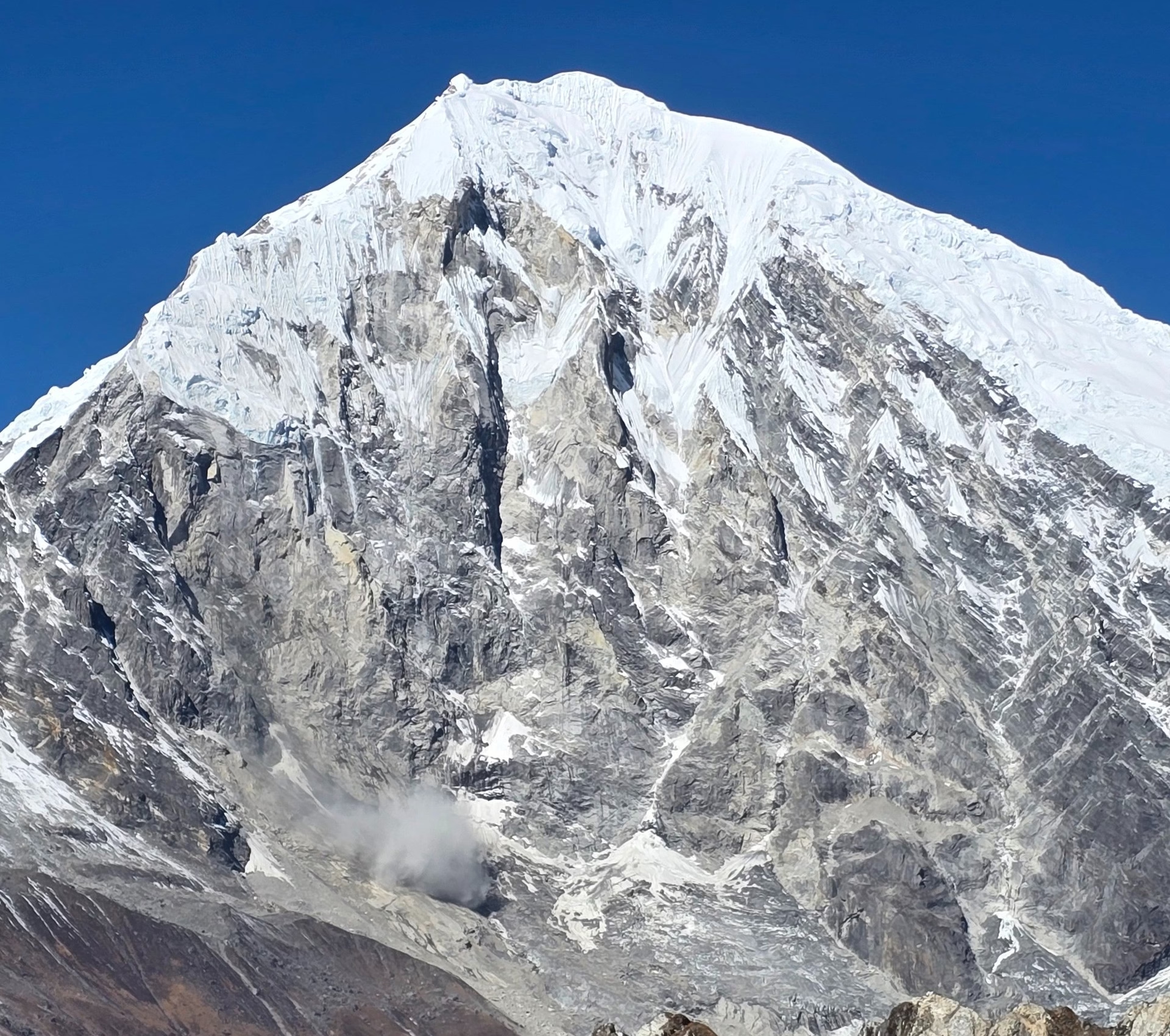
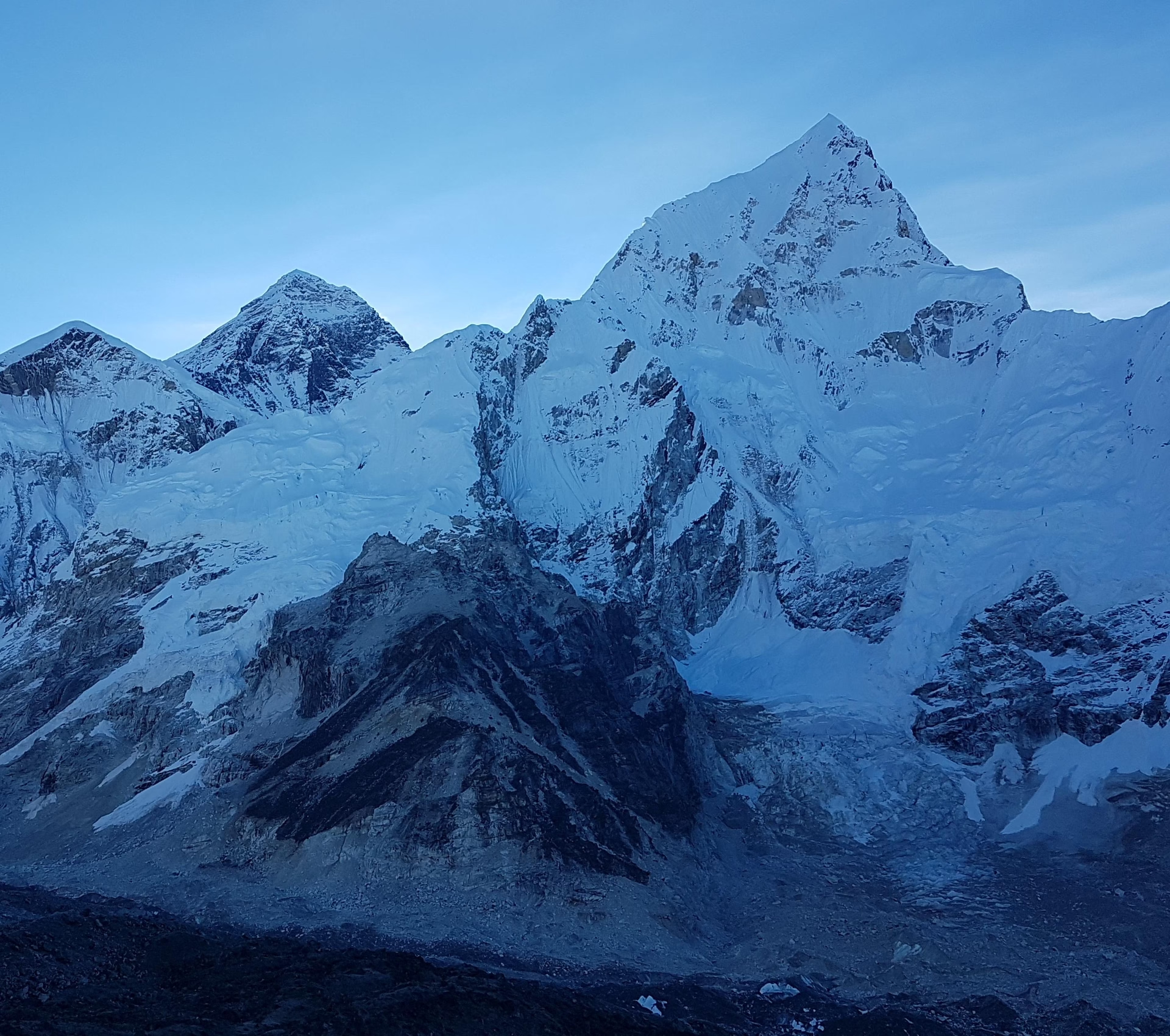
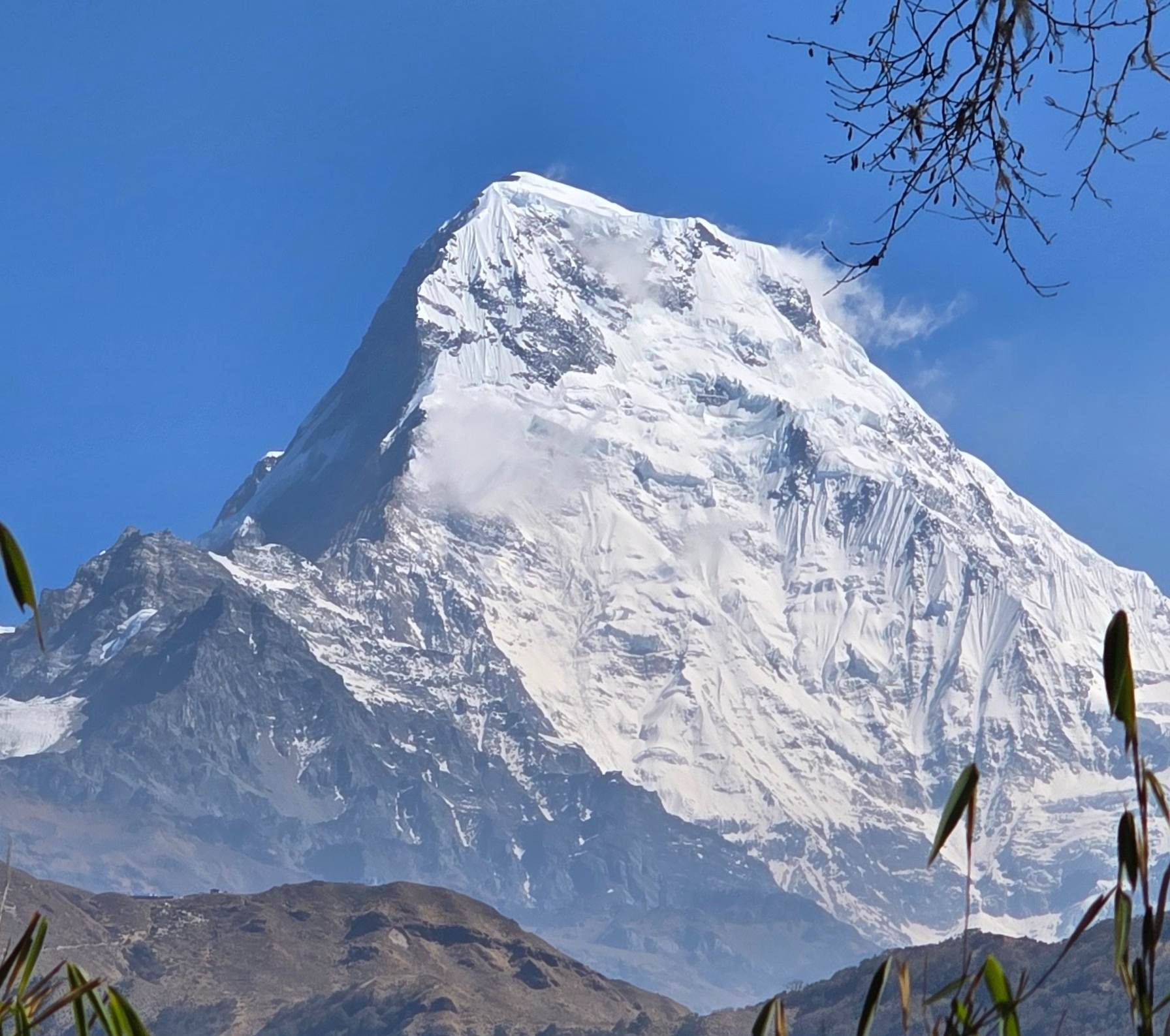
Trekking through practically unpopulated and unexplored territories of the country within the Kanchenjunga Conservation Area.
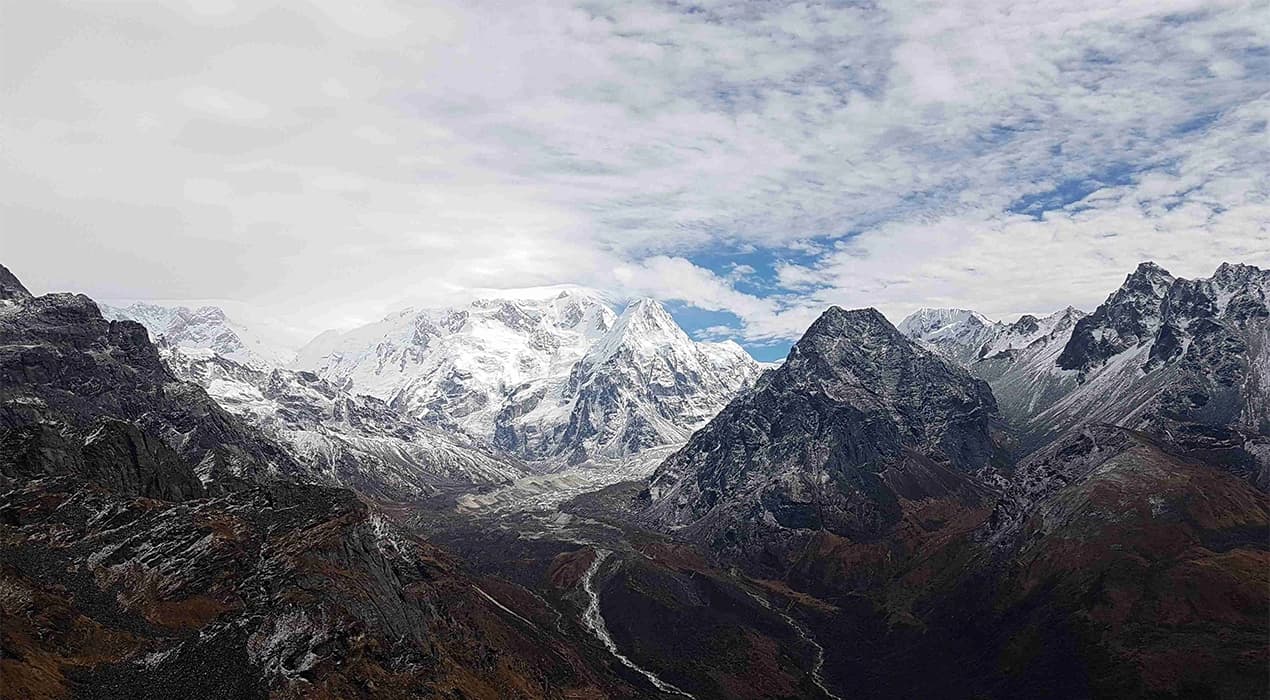
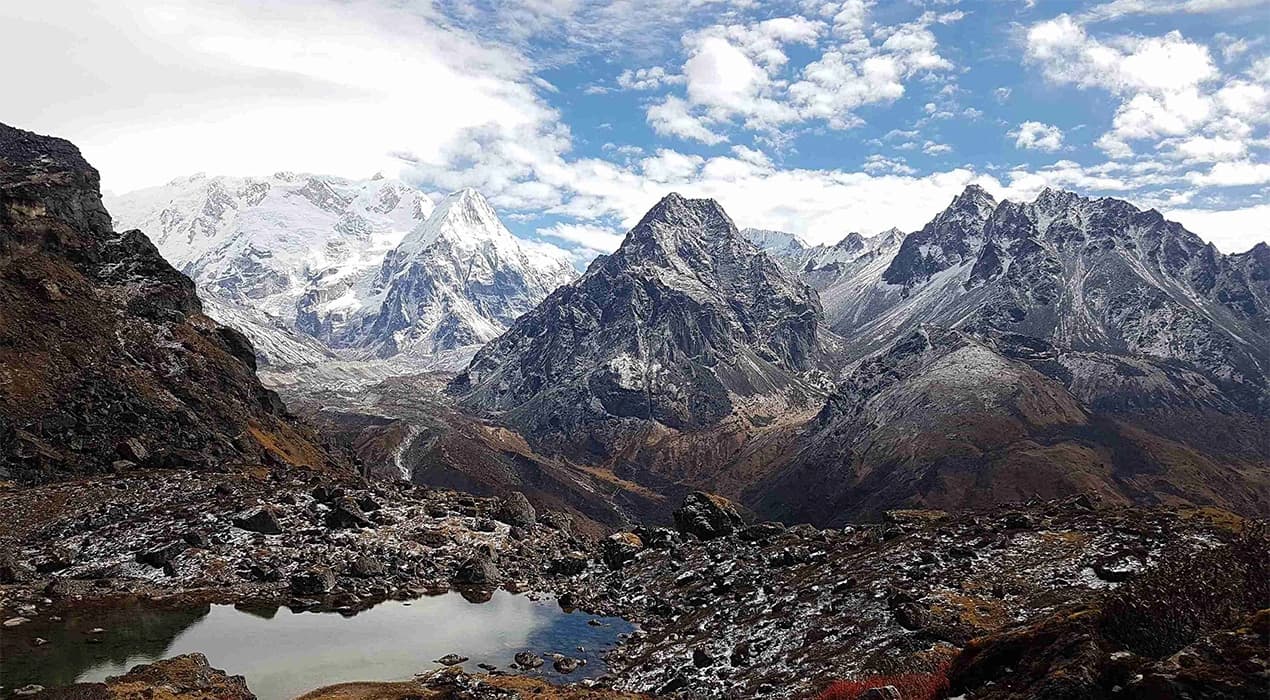
Some awe-inspiring views of the Himalayas, Kanchenjunga, Jannu, and the neighboring towering peaks.
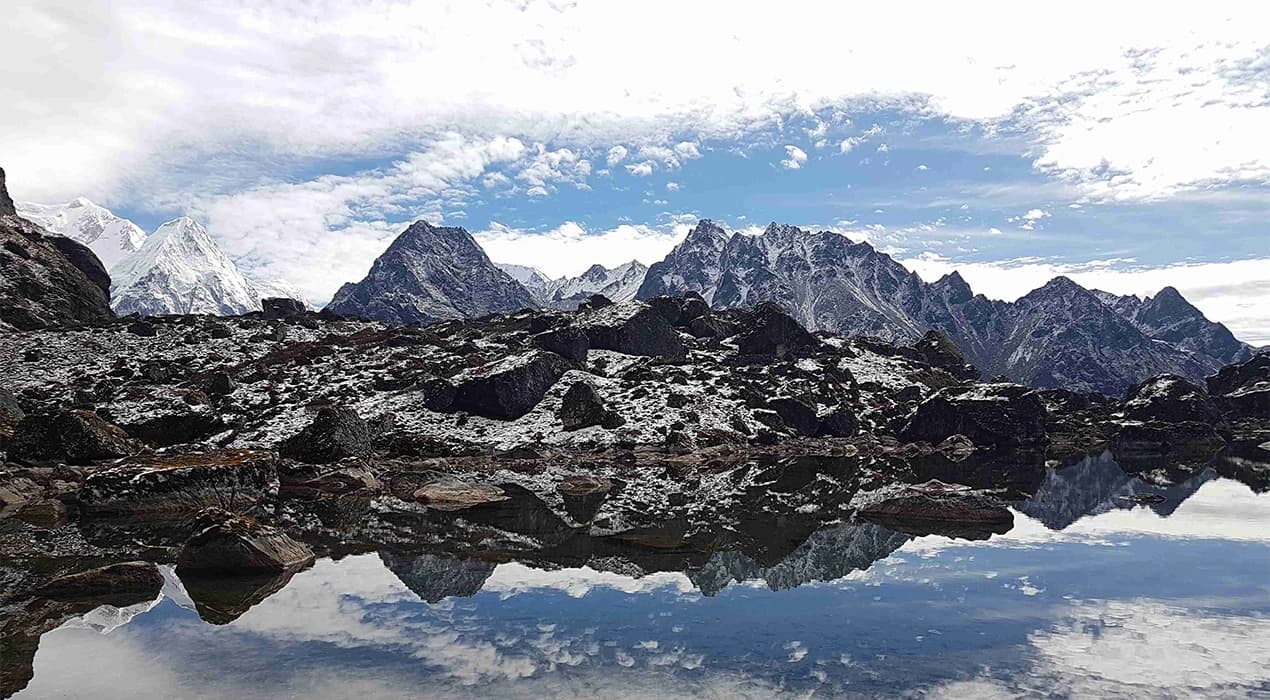
Explore high-altitude, pristine alpine environments with glaciers and meadows.
Kanchenjunga Base Camp (5,143 m) and Yalung Base Camp for spectacular mountain views.
Acclimatization days for safety at high altitudes.
Culturally immersed in the Sherpa and Limbu villages.
Involves a challenging trek only possibly undertaken by more experienced trekkers.
Kanchenjunga Circuit Trek
- 24 days
- |
- Intermediate


- DestinationOff the Beaten Treks
- Group TypeFeatured !
- Activities Guided Trekking
- Accommodation Guest House
- Max. Elevation5143m.
- Group SizeMin. 1 Pax
- VehicleLocal Bus
- MealsBLD
Kanchenjunga Circuit Trek Highlights
24 days Kanchenjunga Circuit Trek Overview
If you're the kind of person who hears "Everest" or "Annapurna" and your first thought is "Yeah, but what about the crowds?", then you're probably going to get what Kanchenjunga is all about. This isn't some pre-packaged, follow-the-leader kind of trek. This is, well, it's the real deal. We're talking about heading way out to the eastern bit of Nepal, the part that still feels properly wild.
Imagine pushing through forests that feel like they've been there since the dawn of time, crossing rivers that are still doing their own thing, and then stumbling into these little villages where life just ticks along differently. And all the while, you're inching closer to this absolute giant, Kanchenjunga – only the third-highest mountain on the planet.
The thing that hits you out there, apart from the sheer scale of it all, is the quiet. It’s not just fewer people; it’s a different kind of silence, a proper mountain hush. You get to connect with the folks living there, share a cup of tea, and see how life works. It’s about more than just ticking off a base camp; it’s about that feeling you get when you're truly out there, relying on your own two feet, and seeing something not many others do.
Honestly, if you’re ready to earn your views, to feel that sense of proper adventure, and to see a side of the Himalayas that still feels a bit like a secret, then this is probably the one. Grab your boots, pack that sense of wonder, and get ready for a journey that’ll stick with you long after you’re back home. It’s one of those trips.
Route Description
Kanchenjunga Base Camp – it’s not just a walk, it’s a proper journey. Takes you right into the guts of eastern Nepal, places where not many folks go. You'll see everything from little villages where life’s pretty much unchanged to these massive, raw mountain landscapes.
First off, you hop on a little plane from Kathmandu down to Bhadrapur. From there, it’s a bit of a bone-rattler of a jeep ride up to Taplejung; that’s where the real walking starts. You’ll wind your way up through terraced fields that look like giant green staircases, into these deep, lush forests, and through tiny settlements like Lalikharka, Khesewa, and a place called Sherpa Gaun.
As you keep climbing, the whole world around you changes. Those forests full of rhododendrons, amazing if they're flowering, slowly turn into these big, open glacial valleys. You'll pass through Cheram, then push on up towards the Yalung Glacier and a spot called Ramche. From there, you can nip over to Yalung Base Camp. That’s your first proper eyeful of Kanchenjunga’s south side; it’s huge, just massive.
Then comes the Sele La, a high pass you've got to get over. Once you're across, you drop down into the northern valley. You’ll walk through villages like Gunsa and Khambachen, and then, the big moment – you make it to Pangpema. That’s Kanchenjunga North Base Camp, way up at 5,143 meters. The views from there are just incredible.
After soaking all that in, it’s time to head back. You'll follow some of the same paths back down to Taplejung, but by then, you’ve done this amazing loop and seen both the north and south sides of the world's third-highest peak. It’s an adventure that sticks with you.
Kanchenjunga Circuit Trek Itinerary
As you reach Tribhuwan International Airport in Kathmandu, Nepal, you will meet our representative from Nepal Trekking Rangers, who will bring you in a private vehicle to your hotel. Here you can freshen up and take some rest. If time allows, stroll about the streets of Thamel and visit local markets, savor street foods, etc.
In the evening, your travel team will gather for a meeting to orient you to your guide and each other. Dinner can be at a nice restaurant or on your own; prep for tomorrow's journey.
If the provided schedule isn't suitable for you, we are able to create personalized travel arrangements according to your preferences and requirements.
Choose Your Package
(Guide. Porter. Permits. Transportation. Accommodation)
Cost Includes
Transportation
International/Domestic Airport pick up and drop
Domestic Round-Trip Flights (KTM-Bhadrapur-KTM)
Private Vehicle from and to Starting and Ending point of Trek
Drop and pick up from and to Hotel and Airport by private vehicle with A/C as per group size
Accommodation
3 Nights Accommodation at Tourist Standard Hotel in Kathmandu and Pokhara with Breakfast
20 Nights Accommodation along the trek (Basic and normal accommodation in Guest Houses or Tea Houses)
Food and Drink
No Food and Drink
Permits and Expenses
Special Restricted permit of Kanchenjunga
TIMS (Trekking Information Management System) Card If requires
All Local Government Taxes and Official expenses
Guide and Porter
Government Register Licensed holder Guide with speaking English Language
An Assistant guide each 7 Trekkers
A porter for each 2 clients (20 KGs limit weights for a Porter)
Covers their (guide and porter) wages, meals, hot drinks, accommodation, transportation, insurance and necessary trekking gears)
Souvenir or Complimentary
Nepal Trekking Rangers Company’s T-shirt/Cap/Buff
Trekking Route Pocket Map
Benefits
NTR’s Duffel Bag each client
Sleeping Bag and Dawn Jacket (return basis) If you require
Farewell or Welcome Dinner at Nepali Traditional Kitchen or Yuddha’s Place
Cost Excludes
International Flights Fare
Nepal Entry Fees (15D-$30, 30D-$50 and 90D-$125)
Accommodation
Accommodation above 3 Nights in Kathmandu or any city
Accommodation in Kathmandu and Pokhara in case of early return in any reason and late departure
Food and Drink
All lunch, dinner and drinks in Kathmandu and Pokhara (Breakfast are included)
Tips
Guides and Porters as gratitude
Travel Insurance and Expenses
Travel Insurance covers emergency High Altitude Rescue/Evacuation (upto 6000m)
Personal Transportation of ground and Air both
Sanitary material such as wet wipe tissues/toilet paper
Hot Shower/hot or boiled water, Wifi, Battery Charge
Hot bag during the nights
Shopping/Souvenir for family and friends
All the extra things/expenses which has not included in the list
Dates & Prices
Your private Kanchenjunga Circuit Trek begins from and ends in , covering 24 days of adventure.
We organize exclusive trip for two or more, ensuring a personal and flexible experience.
Private Group Deals
| 1 Person | US$ 2570 |
| 2 - 6 Person | US$ 2230 |
| 7 - 14 Person | US$ 2140 |
| 15 - 30 Person | US$ 2070 |
Know Before You Go
Why trek to Kanchenjunga?
Kanchenjunga Base Camp is not just another notch on your trekking pole or a wander through Nepal's eastern bits. This thing gets to you. It’ll properly push your buttons, make you feel tiny against those huge mountains – in a good way, mind, and you won't come back quite the same person.
You know how some of those big trails, like around Everest or Annapurna, can feel a bit like a conga line sometimes? Kanchenjunga's a whole different world. It’s where you go if you want to be alone with your thoughts and the mountains. We’re talking proper remote. The paths are quieter, like they’re just waiting for you. The forests feel ancient, untouched. Sometimes it feels like they’re putting on a show just for you. A lot of serious trekkers, who’ve been everywhere, reckon this is the Himalayas’ best-kept secret – a place where nature still calls all the shots.
You’ll pass through these little villages – Limbu, Rai, and Sherpa folks – where life just moves at its own pace, a pace that’s been going for centuries. The welcome you get is so warm. You’ll see the yak herders doing their thing, stumble across these old Buddhist monasteries tucked away, it’s not like a tourist show; it’s just life, and you get to be a little part of it for a while. It feels real.
And the views, words don't do it. One minute you’re in these almost tropical valleys, then you’re hauling yourself over high alpine passes, then you’re deep in these lush forests, and suddenly it’s like you’re on the moon, all glaciers and rock. The variety is just insane. And right in the middle of it all, there’s Kanchenjunga itself. Third highest in the world, and the locals hold it sacred. You feel that. You’ll see these massive ice cliffs, and you’ll hear the avalanches rumbling in the distance long before you ever see anything. It’s powerful stuff.
Now, this trek isn’t a walk in the park. It’s long. It’s rough underfoot. You’re properly out there. But that’s kind of the whole point, isn’t it? Kanchenjunga isn’t for someone who just wants a pretty picture for their Instagram. It’s for people who want to earn their views, who prefer the quiet path, who’ll take a bit of a challenge over plush comfort, and who want something deeper than just ticking off a list.
Best Time to Trek
Spring (March to May)
Spring is a pretty fantastic time to go. The weather's usually spot-on for walking, not too hot, not too cold, even when you get up high. The whole place just explodes with color. Rhododendrons, orchids, magnolias – the forests are like a massive, wild garden. You'll probably see more animals around, too. Mornings are generally super clear, giving you those amazing, crisp views of Kanchenjunga and all the peaks around it. If you love seeing nature show off and don't mind a bit of life on the trail, spring's your winner.
Autumn (Late September to Early November)
Now, if you ask most trekkers, they'll tell you autumn – that's late September to early November – is the time to do Kanchenjunga. And they're not wrong. The monsoon's done its thing, washed all the dust away, so the air is just incredibly fresh. The skies are this amazing deep blue, and the mountains, just wow! They're so sharp and clear, it's unreal. Days are pleasant for trekking, though the nights get pretty chilly, especially once you're up over 3,000 meters.
This is when Nepal has some of its biggest festivals, like Dashain and Tihar. So, you might get to see some cool local celebrations happening in the villages, which is always a treat.
Winter (December to February)
Winter, that's a different beast altogether. You've got to be serious, properly kitted out, and know what you're doing if you're thinking about Kanchenjunga then. The trail will be dead quiet, which is amazing in its way, but it gets seriously, brutally cold. Snow can make things tough, sometimes even dangerous, up high. A lot of the teahouses in the higher spots will be shut down because of the snow, and some of the passes might just be a no-go. But if you're geared up for the cold and want that feeling of having the entire Himalayan wilderness to yourself, with everything blanketed in snow, well, it’s an experience you won’t forget. Just not for the faint-hearted!
Monsoon (June to August)
And then there's monsoon, June through August. Probably best to give Kanchenjunga a miss then. It just rains. A lot. Trails get super slippery, there's a real risk of landslides, and you often can't see much because of the clouds, especially down in the forests. Leeches are out in force, too, which is never fun. The mountains are usually hidden away, and everything's just damp. It’s just not the best time for enjoyment or safety. Best to pick another season for this one.
Accommodation and Food on Trek
Accommodation
Along the Kanchenjunga trek, you'll be staying in what we call teahouses – pretty basic spots run by local folks in the villages. Sometimes it might be more like a homestay, which is even more of an 'in-their-home' kind of vibe.
Rooms are generally set up for two people, just simple beds, and you'll be sharing the bathroom facilities. Down in the lower villages, some of the teahouses might have a hot shower you can pay a bit extra for – a real treat! But as you head up higher, things get a lot more rustic. Don't expect much in the way of heating; it's pretty rare. If you need to charge your phone or camera, you might find a spot for it, but they'll usually charge you a bit for the electricity, and it’s not always guaranteed. The most important bit of kit? A warm sleeping bag. Seriously, especially once you're over 3,000 meters, you'll be glad you have it. Don't go expecting luxury, but what you will get is some genuinely friendly local hospitality, which is worth its weight in gold.
Food
Food-wise, the teahouses cook up fresh meals, mostly using whatever ingredients they can get locally. The absolute staple, the thing that'll keep you going, is dal bhat. It's a big plate of rice, a hearty lentil soup, and some curried veggies – super filling and just what you need. But you'll find other stuff too, like momo (those tasty dumplings), noodle soup (thukpa), fried rice, pancakes for breakfast, and Tibetan bread.
The higher you get, the simpler the menu becomes, and prices might creep up a bit – it's a long way to carry supplies! You can always get tea, coffee, and that wonderful hot lemon ginger drink pretty much everywhere. A couple of important things: try to steer clear of cold or uncooked food when you're up high, and make sure you're purifying all your drinking water. Chucking some of your own favorite snacks or energy bars into your pack? Always a good idea for those moments when you need a quick boost.
Permits and Documentation
So, to legally wander around the Kanchenjunga region, you've got to have a few official bits of paper. It's just how Nepal keeps things in order and looks after these amazing places.
The Kanchenjunga Restricted Area Permit. This is a big one because Kanchenjunga is a protected zone.
The Kanchenjunga Conservation Area Permit (KCAP).
A TIMS card (Trekkers’ Information Management System).
Nepal Entry Visa.
Your passport is good to go – it needs to be valid for at least six months after your trek is due to finish.
Your trekking company, Nepal Trekking Rangers, usually takes care of getting all these permits sorted for you. But keep copies of everything with you, and always have your original passport on you while you're out on the trail. You never know when you might need to show them.
Trek Difficulty and Fitness
Chances are, you will consider this trek a challenging adventure. It fits a very limited category of trekkers who are physically strengthened and mentally prepared. You must go day after day, walking 5 to 8 hours through treacherous terrains with steep ascents and descents and drastically varying altitudes-from as low as around 90 meters (Bhadrapur) to more than 5,100 meters (Kanchenjunga Base Camp).
Uphill hikes that never seem to rest, combined with high altitude, require not only a fit cardio workout but also strong leg muscles and endurance. The place is quite remote, with scant facilities, which means you have to be prepared to be self-sufficient and adaptable.
A major risk factor with altitude sickness is included, and hence the days of acclimatization are carved in the program to give your body safety from the risk factor.
Preparation Tips:
Start your cardio training, preferably 2-3 months prior, by running, cycling, or swimming.
Combine with strengthening and stamina exercises with an emphasis on the legs and core.
Try hiking around your neighborhood with a loaded backpack, as close as you can to the actual trekking conditions.
Consult your doctor regarding your health and other checks.
Equally rewarding, with breathtaking views and feeling one with nature, is the Kanchenjunga trek under proper preparation and an open mind.
Guided Trek or Independent
Guide or no guide? Most trekkers go with a guide, and for Kanchenjunga, it makes a lot of sense. See, this isn't just any old trail; it's way out there, a restricted area, and you need special permits and all that jazz. Plus, knowing the local ins and outs is a huge help.
Having a guide isn't just about them pointing the way. They're the ones who'll sort out all that permit hassle, find you a place to sleep each night, and they can tell you so much about the local culture, the mountains, the plants – stuff you’d just walk right by otherwise. And, super importantly, they’re looking out for your safety. They know how to handle the altitude stuff, what to do if someone’s not feeling great, or if there’s an emergency. Often, they’ll sort out porters too, those amazing guys who carry the bulk of your gear. That makes a massive difference to how much you can enjoy the walk, rather than just slogging.
Now, if you're a seasoned trekker, you've done loads of this kind of thing before, you're a whiz with a map and compass, and you're super organized with logistics, then going independent could be an option. You get more freedom, can change plans on a whim, that kind of thing. But, for Kanchenjunga, it’s a much bigger headache to do it solo. Those permit rules are tricky, and you need to have your planning dialled in.
If you want things to run smoother, feel safer, and get a richer experience of the place, I’d say a guided trek is the way to go for Kanchenjunga. If you're an old hand at this and want to be in total control, and you're up for the extra legwork, then independent might be your thing. But for most people, especially in a place this wild, a guide is a lifesaver.
Packing Essentials for Trek
Packing the right gear is essential while trekking in the Kanchenjunga Circuit. Here is the list of items that need to be packed:
Clothing
Moisture-wicking base layers (tops & bottoms)
Warm fleece or down jacket (insulated mid-layer)
Waterproof and windproof shell jacket
Lightweight trekking pants (quick-dry)
Thermal underwear (for cold nights)
Warm hat/beanie and sun hat
Buff or neck gaiter
Gloves (inner and insulated outer)
Warm socks (several pairs, wool recommended)
Gaiters (optional but useful in muddy/snowy areas)
Sleepwear (thermal or fleece)
Footwear
Sturdy, broken-in trekking boots (ankle support)
Comfortable camp shoes or sandals (for evenings)Extra laces and blister prevention tape
Sleeping Gear
Four-season sleeping bag (rated at least -15°C)
Sleeping bag liner (optional for extra warmth)
Lightweight travel pillow (optional)
Trekking Essentials
Trekking poles (highly recommended)
Backpack (50–65L) with rain cover
Daypack (20–30L) for daily use
Reusable water bottles or hydration bladder (2L+)
Water purification tablets, filter, or SteriPEN
Headlamp with extra batteries
Sunglasses (UV-protective)
Sunscreen and lip balm (SPF 30+)
Quick-dry towel
Lightweight packable rain poncho or cover
Personal Hygiene & Health
Toothbrush, toothpaste, biodegradable soap
Wet wipes, hand sanitizer, and toilet paper
Personal first aid kit (include blister care, altitude meds, etc.)
Any prescription medication
Small nail clippers and tweezers
Menstrual hygiene products (if applicable)
Documents & Money
Passport (with 6+ months validity)
Nepal visaPrinted trekking permits (RAP, KCAP, TIMS)
Travel insurance with trekking & evacuation coverage
Extra passport photos (for permits)
Cash in NPR (ATMs not available on the trail)
Snacks & Extras
Energy bars, nuts, dried fruit, or chocolate
Lightweight cutlery or a spork
Zip-lock bags or dry sacks (for organization)
Notebook and pen (optional)
Small power bank or solar charger
Camera or phone (with storage space)
Traveller Review
His quite nature, and taking care of things when and where required.
I spent over one month with Yuddha, his wife and team of assistants on treks and religious travel namely i) Annapurna , 5 days ii) Pokhara and Muktinath, 8 days and iii) Everest Base Camp and Three Passes, 19 days. I must say that my wife and I had wonderful time with Yuddha and his family. Yuddha is a true professional and goes out of way to make things happen. During my time there were several weather related events but Yuddha was able to find solutions for each adverse situation and allow us to continue our journey. He is flexible with timeline, providing facilities and help. My wife also stayed with his family while I was on trek. She thoroughly enjoyed the hospitality provided by his wife. 
Prakash B 20th Oct, 2026 Great holiday on the roof of the world
Yuddha the company owner has taken care of everything from domestic flights to car transfers, hotels etc. He has put together a very individual trip that has left nothing to be desired. Also the hike Anapourna Circuit was perfectly organized. I can only recommend this company to anyone who wants to travel to Nepal individually. 
Laura B 12th Aug, 2026 A Guide Who Truly Spreads Light
Yuddha is the best guide I have ever met. He is sensitive, very experienced, and always cheerful. He answered my questions with openness, honesty, and kindness. He paid close attention to our group’s needs, and I felt completely safe under his guidance. He booked wonderful accommodations for us and handled the meals very professionally as well. I hope I’ll get the chance to hike with him again — I really miss our conversations. 😊 
Ghyzsofi 12th Aug, 2026 Highly recommend
I had an amazing experience trekking in the Everest region with Nepal Trekking Rangers. What truly made this journey special was Yuddha. I first met him as a customer during the trek, and by the end of the trip, we had become friends.Yuddha was incredibly supportive, knowledgeable, and attentive throughout the experience. Even after the tour ended, he continued to check in and offer extra care and help, which really meant a lot. His information, guidance, and genuine concern made the whole trip smooth and memorable.He is a truly nice guy—down to earth, mellow, and easy to be around. You can tell he genuinely cares about his clients and his work. I highly recommend Nepal Trekking Rangers and especially Yuddha to anyone planning a trek in Nepal. I sincerely hope his business continues to grow strong—he deserves it. 
Tia 15th Oct, 2025